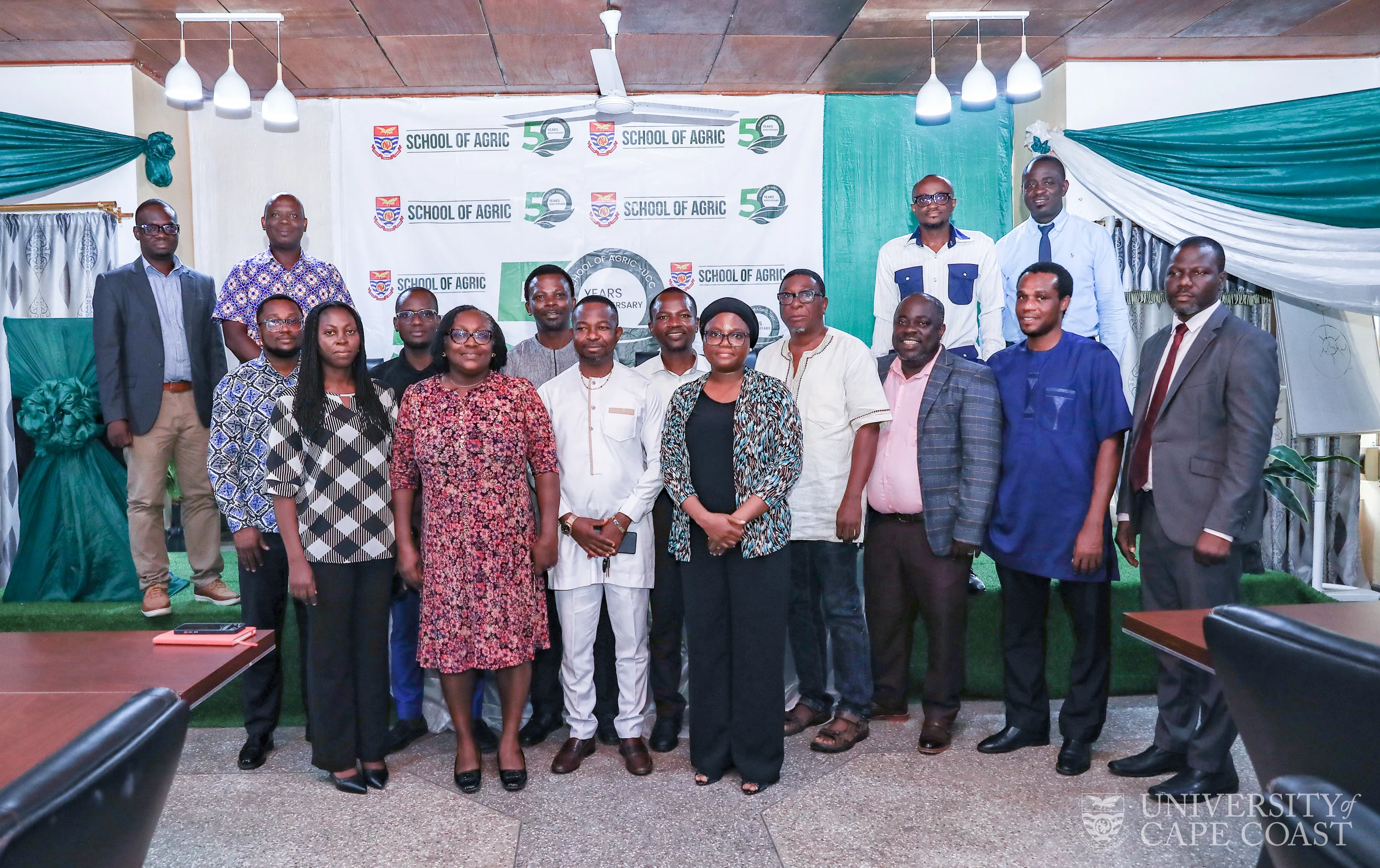
The University of Cape Coast (UCC) Hospital has recorded a high rating in the 2026 Central Regional Hospitals and Polyclinics Peer Review, reaffirming its commitment to quality healthcare delivery and continuous improvement.
The hospital recorded an overall score of 95.1 per cent, reflecting its strong adherence to the principles and standards established by the Central Regional Health Directorate.
The annual Peer Review Programme is a quality improvement and quality assurance initiative that enables sister health facilities to assess one another using a nationally adopted checklist. The assessment covers key areas of healthcare delivery, including governance, management, clinical practice, patient safety, infection prevention and control, environmental cleanliness and occupational health.
The University Hospital was placed in Zone One, alongside Elmina Government Hospital, Cape Coast Metro Hospital, Ewim Polyclinic and Ankaful General Hospital. It was assessed across seven key modules by a team comprising representatives from hospitals within the zone.
The assessment evaluated the hospital’s performance against established principles and standards of the Regional Health Directorate, with particular attention to Environmental Cleanliness; Infection Prevention and Control (IPC); Emergency Services and Systems; Quality and Safety Management Systems; Clinical Practice; Client Care; and Occupational Health.
The University of Cape Coast (UCC) Hospital has recorded a high rating in the 2026 Central Regional Hospitals and Polyclinics Peer Review, reaffirming its commitment to quality healthcare delivery and continuous improvement.
The hospital recorded an overall score of 95.1 per cent, reflecting its strong adherence to the principles and standards established by the Central Regional Health Directorate.
The annual Peer Review Programme is a quality improvement and quality assurance initiative that enables sister health facilities to assess one another using a nationally adopted checklist. The assessment covers key areas of healthcare delivery, including governance, management, clinical practice, patient safety, infection prevention and control, environmental cleanliness and occupational health.
The University Hospital was placed in Zone One, alongside Elmina Government Hospital, Cape Coast Metro Hospital, Ewim Polyclinic and Ankaful General Hospital. It was assessed across seven key modules by a team comprising representatives from hospitals within the zone.
The assessment evaluated the hospital’s performance against established principles and standards of the Regional Health Directorate, with particular attention to Environmental Cleanliness; Infection Prevention and Control (IPC); Emergency Services and Systems; Quality and Safety Management Systems; Clinical Practice; Client Care; and Occupational Health.
The University Hospital recorded scores of 95.58 per cent in Environmental Cleanliness, 98.75 per cent in Infection Prevention and Control, 92 per cent in Emergency Services and Systems, and 96.03 per cent in Quality and Safety Management Systems.
It further scored 90.38 per cent in Clinical Practice, 99 per cent in Client Care and 97 per cent in Occupational Health. The scores, all above 90 per cent, demonstrate the hospital’s strong performance across the various dimensions of healthcare delivery while identifying opportunities for further improvement.
In the reviewers’ recommendations, the hospital was tasked to strengthen safety, infection prevention and ensure staff wellbeing.
Speaking at the dissemination of the findings, the Acting Pro Vice-Chancellor of UCC, Prof. Mrs. Christine Adu-Yeboah, urged health facilities to focus on using the peer review exercise to improve healthcare practices in the region rather than competing to emerge as the best-performing facility.
“The assessment should be seen as an opportunity to learn and strengthen our systems rather than looking for shortcomings,” she said.
Prof. Adu-Yeboah urged health professionals at the University Hospital to translate the recommendations from the assessment into action to address identified gaps and further strengthen the quality of healthcare services.
The Director of the Directorate of University Health Services, Dr. James Kojo Prah, acknowledged the recommendations and assured that the Directorate would work towards improving the hospital’s services.
He expressed appreciation to University Management and staff of the University Hospital for their support and commitment throughout the peer review exercise.
The University Hospital recorded scores of 95.58 per cent in Environmental Cleanliness, 98.75 per cent in Infection Prevention and Control, 92 per cent in Emergency Services and Systems, and 96.03 per cent in Quality and Safety Management Systems.
It further scored 90.38 per cent in Clinical Practice, 99 per cent in Client Care and 97 per cent in Occupational Health. The scores, all above 90 per cent, demonstrate the hospital’s strong performance across the various dimensions of healthcare delivery while identifying opportunities for further improvement.
In the reviewers’ recommendations, the hospital was tasked to strengthen safety, infection prevention and ensure staff wellbeing.
Speaking at the dissemination of the findings, the Acting Pro Vice-Chancellor of UCC, Prof. Mrs. Christine Adu-Yeboah, urged health facilities to focus on using the peer review exercise to improve healthcare practices in the region rather than competing to emerge as the best-performing facility.
“The assessment should be seen as an opportunity to learn and strengthen our systems rather than looking for shortcomings,” she said.
Prof. Adu-Yeboah urged health professionals at the University Hospital to translate the recommendations from the assessment into action to address identified gaps and further strengthen the quality of healthcare services.
The Director of the Directorate of University Health Services, Dr. James Kojo Prah, acknowledged the recommendations and assured that the Directorate would work towards improving the hospital’s services.
He expressed appreciation to University Management and staff of the University Hospital for their support and commitment throughout the peer review exercise.