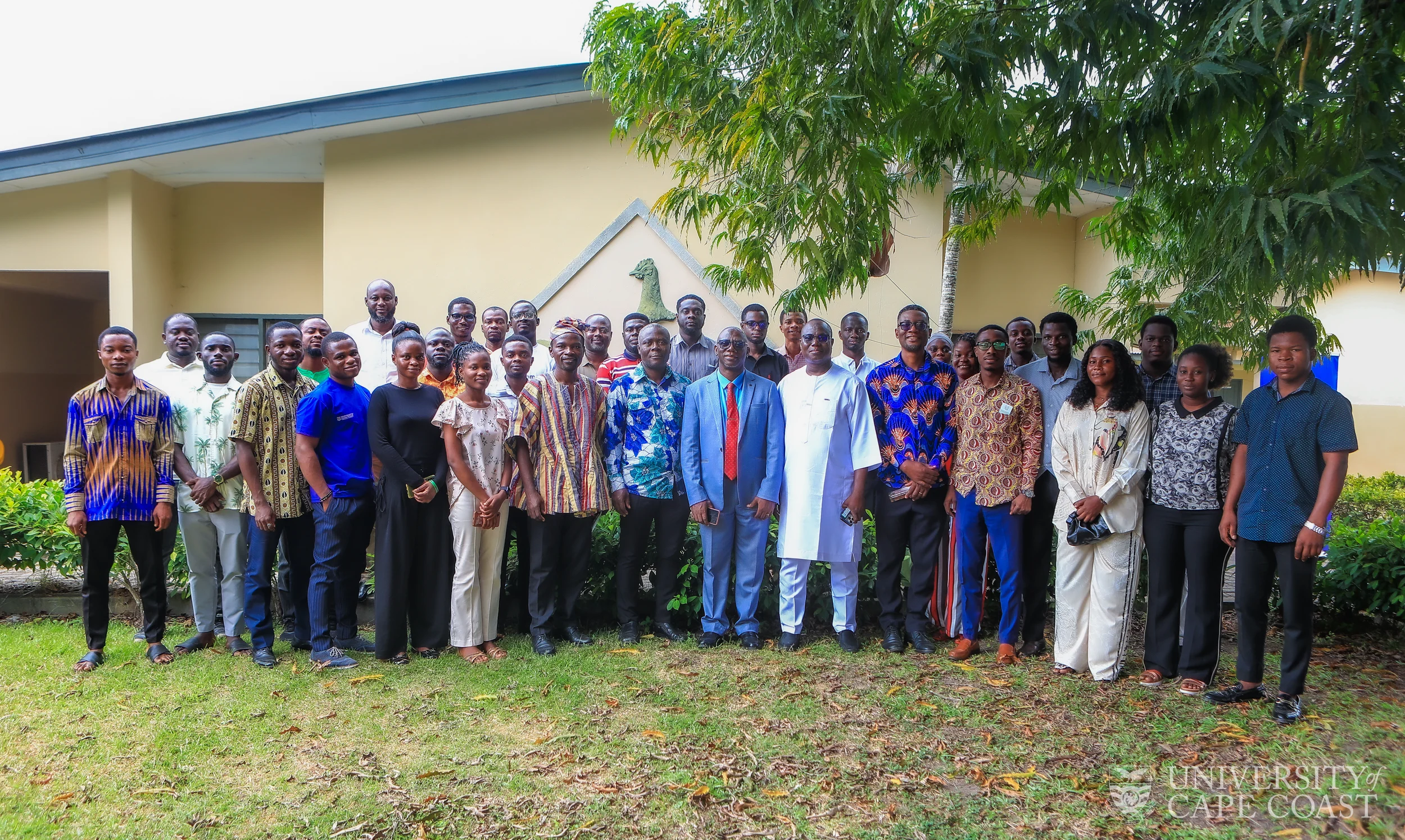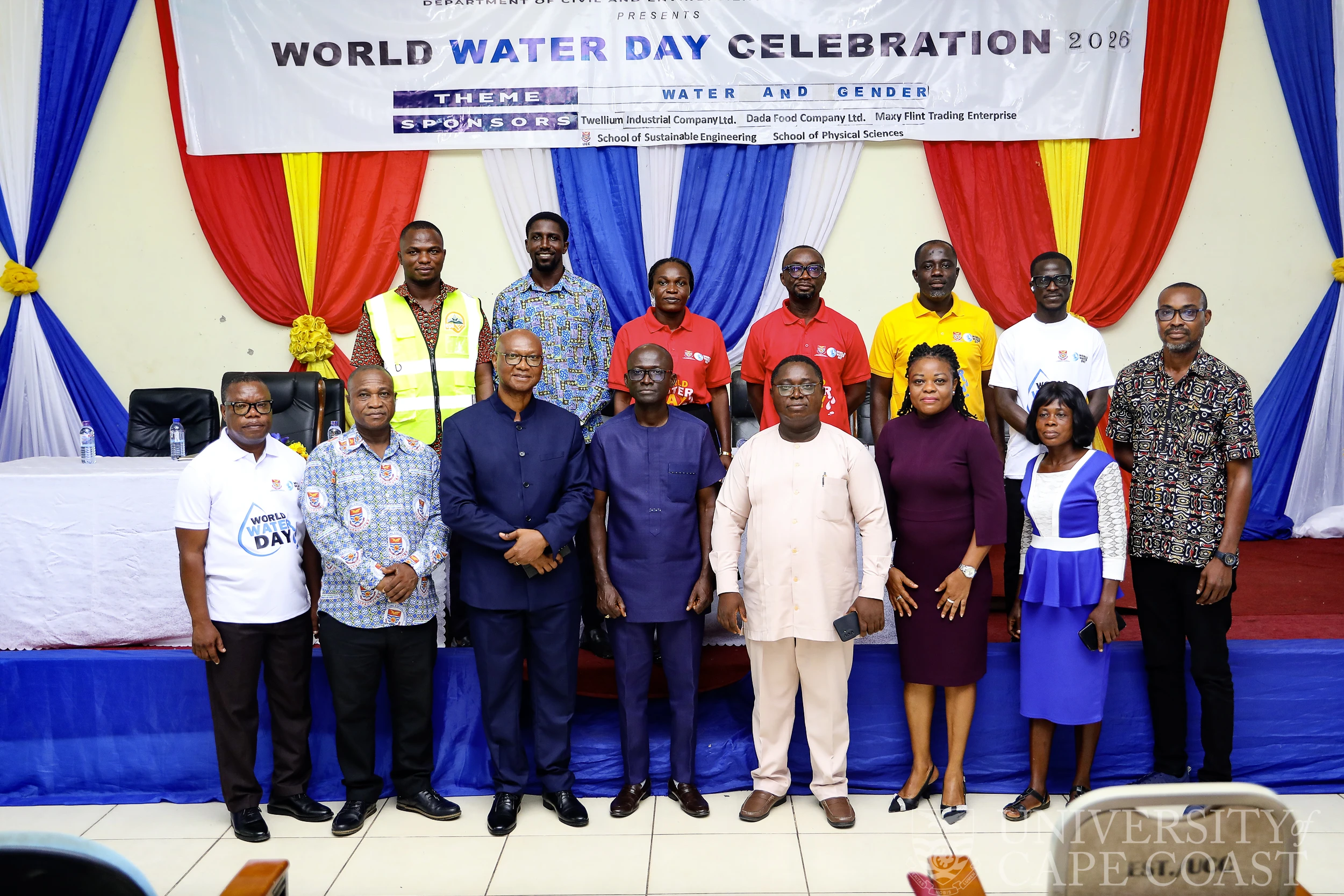
The Department of Civil and Environmental Engineering (DCEE) of the School of Sustainable Engineering, University of Cape Coast (UCC) has held the 2026 World Water Day celebration on the theme “Water and Gender”.
The occasion highlighted the importance of water access for women and girls, as well as advocating for equal opportunities in water management.
The department outlined several activities, including a quiz competition for selected basic schools in the Cape Coast metropolis, a panel discussion, a presentation on the theme, and a sketch by the Ghana National College, all geared towards highlighting the importance of access to water, which directly empowers women and girls, who shoulder the primary burden of water scarcity.
In his welcome address, the Head of DCEE, Prof. Ebo Duncan, stressed the importance of water to human life and development, explaining that the effects of water scarcity were not the same for everyone, as women and girls often carry the heaviest burden.
He further emphasised that achieving Sustainable Development Goal 6, which focuses on clean water and sanitation, was closely linked to Sustainable Development Goal 5 on gender equality.
Prof. Duncan, therefore, called on the university community to move beyond discussion and take practical action to support lasting solutions.
Speaking as the keynoter, the Central Regional Director of the Community Water and Sanitation Agency (ICWSA), Dr. Gustav Osiakwan, outlined the major water and sanitation challenges facing Ghana at both regional and national levels.
He indicated that more than 2 billion people worldwide still lacked access to safely managed drinking water, a situation that places a heavy burden on women and children.
“When water resources are far or unreliable, girls often miss school to fetch water, affecting their attendance and performance. Poor sanitation facilities also make girls vulnerable to harassment and dropout,” he added.
Focusing on the Central Region, he identified illegal mining activities and increasing saltwater intrusion along the coast as major threats to water quality and affordability.
Dr. Osiakwan also noted that national water coverage remains below the target of 84%, especially in rural communities and maintained that water facilities tend to operate better functionally when women are actively involved in their management.
A communique issued by DCEE, among others, called for the integration of gender-responsive budgeting into all national water, sanitation, and hygiene (WASH) programmes, ensuring that at least 40% of water sector financing directly benefits women and girls by 2030.
It also noted the need to achieve parity in water governance by mandating that women hold no less than 50% of decision-making positions in water basin authorities, national water councils, and international water negotiating delegations by 2028 as well the eradication of period poverty barriers in water and sanitation infrastructure by ensuring universal access to safe, private, and menstrual hygiene-friendly WASH facilities in all public schools, health centres, and displaced persons camps by 2027.
The Provost of College of Agriculture and Natural Sciences, Prof. Rofela Combey, who chaired the event, said access to safe and reliable water was not a basic human right but also a matter of justice, dignity and equality.
The Director of CEGRAD, Prof. Eunice Fay Amissah, in a solidarity message, emphasized the need to empower women to take leading roles in water management and decision-making.
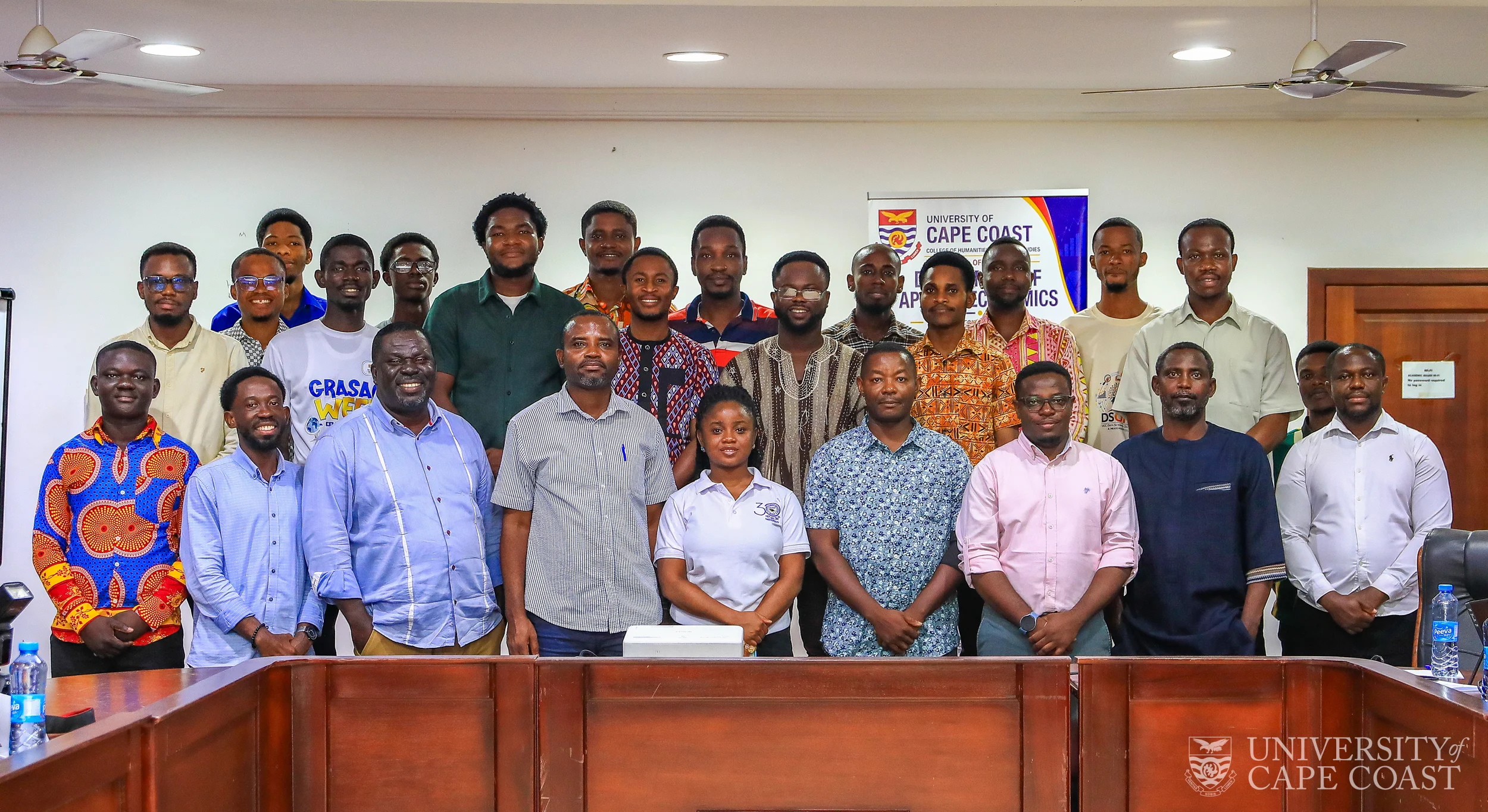
The event was attended by representatives of civil society organisations, academia and research institutions, community members, and students, among others.
Source: Documentation and Information Section-UCC