
Dept. of Nutrition and Dietetics and GAND hold FOPWL Symposium
May 9, 2025
The Department of Nutrition and Dietetics of the University of Cape Coast (UCC) in collaboration with the Ghana Academy of Nutrition and Dietetics (GAND) has held a symposium on Front-of-Package Warning Labelling (FOPWL) and Nutrition Profiling Models (NPM) as part of efforts towards addressing the country’s rising burden of Non-Communicable Diseases (NCDs).
The symposium brought together key stakeholders, including nutrition and academic experts, policymakers, and students among others.
With SEND Ghana, an NGO, serving as an implementing partner of the initiative, it was to produce a comprehensive report summarizing key outcomes and recommendations to inform policy development and further academic discourse in the country.
A Lecturer at the Department of Nutrition and Dietetics, Dr. Nana Ama Frimpomaa Agyapong, speaking on the topic, “Ghana’s Food Environment”, expressed worry over the rise in Non-Communicable Diseases (NCDs) such has hypertension, diabetes, stroke and cancers, in the country.
According to her, the rate at which cases of non-communicable diseases, especially among the youth, were being recorded was alarming.
She disclosed that the expenditure on non-communicable diseases continues to overwhelm the government.
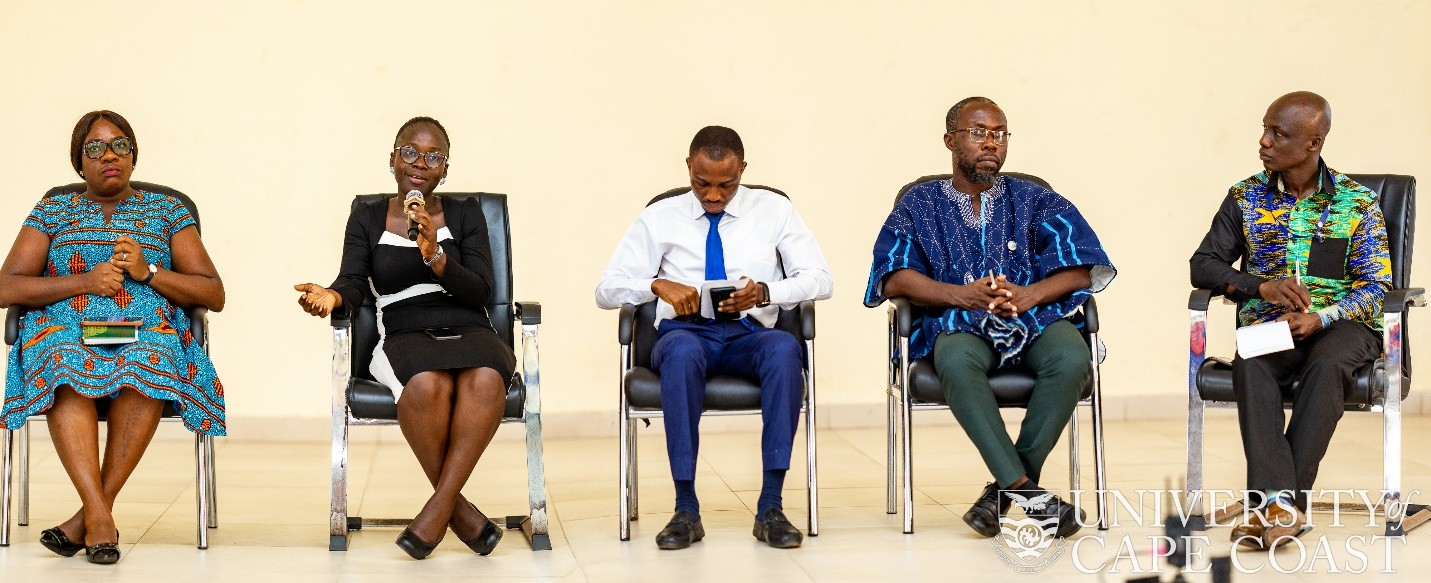
Members of the panel discussing the theme for the symposium
Dr. Agyapong said educating the public on food labeling was a measure to deal with the canker of NCDs. She called for a change in lifestyle choices and urged stakeholders to help in awareness creation on NCDs and their prevention.
A Senior Lecturer at the Department of Dietetics at the University of Ghana, Dr. Laurene Boateng, speaking on, “Policy Pathways to the Formulation of FOPWL and Nutrition Profiling Model Ghana,” urged food producers to clearly label their products with indicators of nutrient levels such as high, medium, or low to help consumers make informed choices.
She said Ghana was responding to the challenges and making progress on strengthening policy responses to NCDs.
She said FOPWL policy was in the offing and called for a multi-sectoral approach for the successful implementation of the policy.
Dr. Boateng insisted that NCD prevention and control required leadership and coordinated multi-stakeholder engagement at the governmental levels and a wide range of actors to implement measures to fight the menace.
For her part, a representative of SEND Ghana, Ms. Baaba Sam, said Ghana needs to prioritise the prevention and control of Non-Communicable Diseases (NCDs), considering their weight on the existing healthcare system.
She said that while curative healthcare was important and necessary, it was prohibitively expensive and could be avoided if stakeholders invested in NCD prevention.
The symposium was chaired by the Dean of the School of Medical Sciences, Prof. Sebastian Eliason.
Source: Documentation and Information Section-UCC