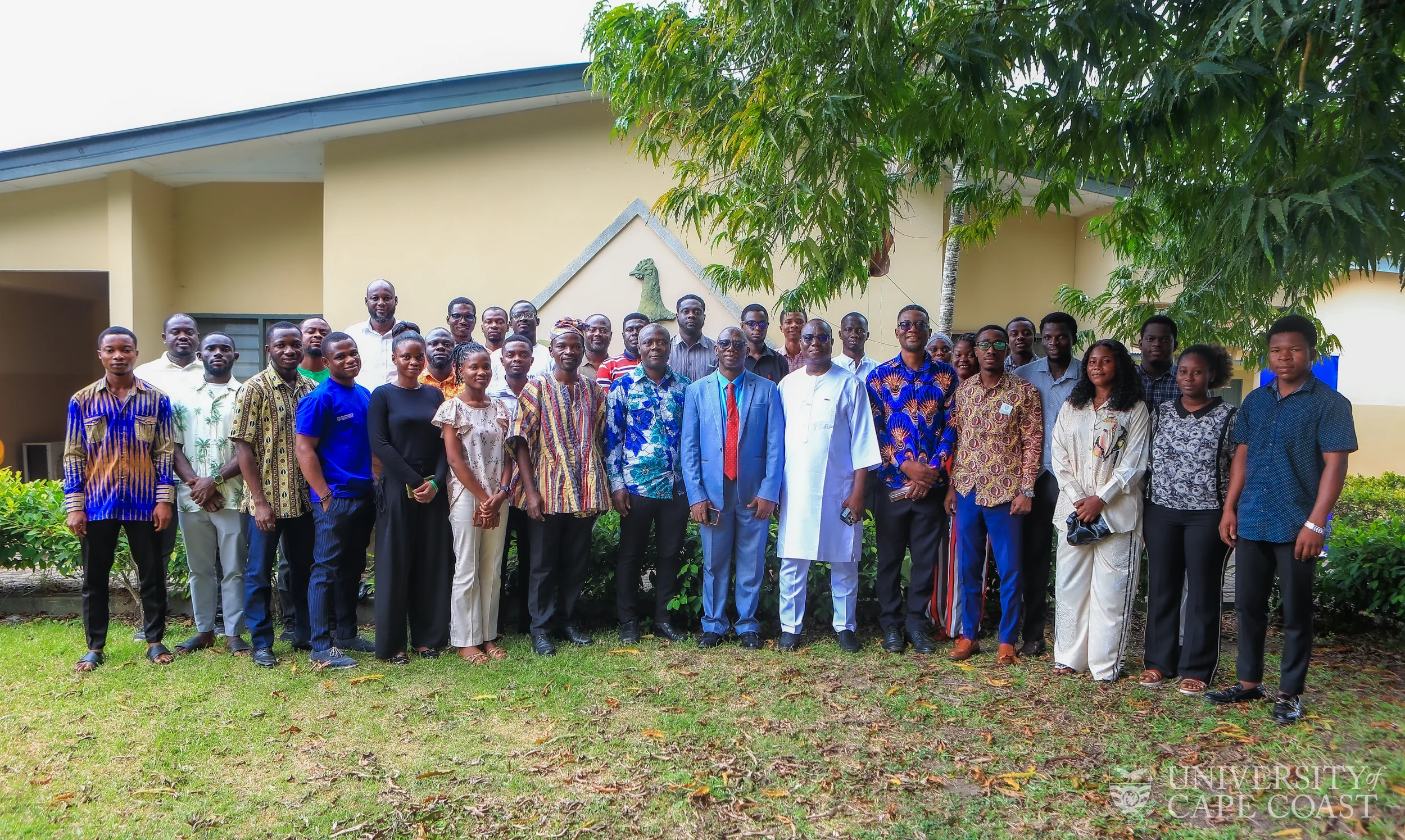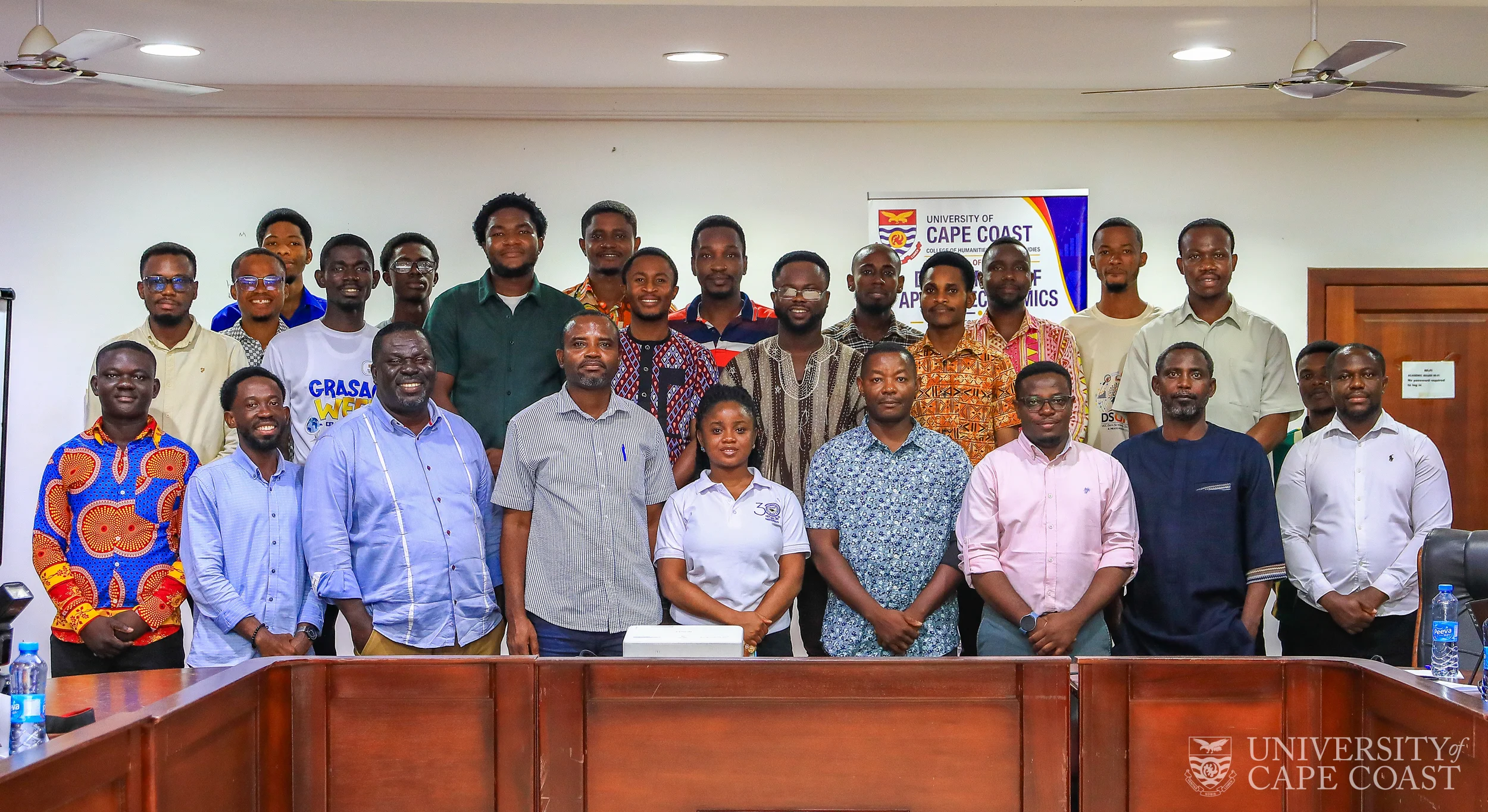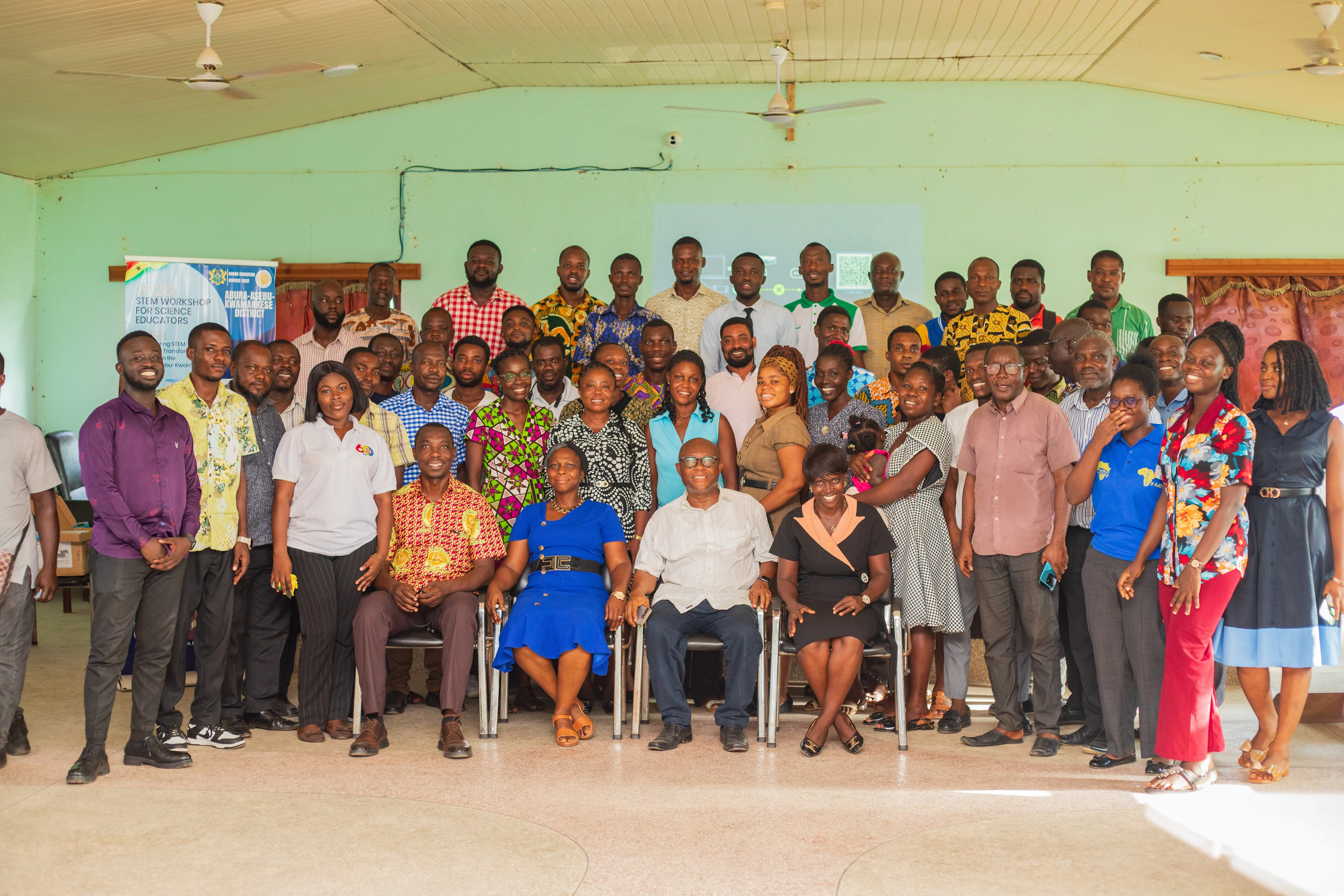
The University of Cape Coast (UCC) branch of the Ghana Association of Science has organised a Science, Technology, Engineering and Mathematics (STEM) education workshop for basic school teachers in the Abura Asebu Kwamankese District (AAK) of the Central Region to enhance their skills in using technology to teach.
It was also aimed at equipping the teachers with practical skills in handling STEM classes and the need to get students to develop interest in the STEM education.
The teachers also received practical lessons in basic electrons to enable them to understand the subject well and teach it to the best of their abilities.
Addressing participants in electronics, a professor at the Department of Physics, Prof. Benjamin Anderson, indicated that exposing children to electronics at the early stage would help them to appreciate and understand technology and grow with practical technological knowledge.
He stressed the importance of safety electronics, cautioning them that electricity and electronics could be dangerous if mishandled.
Prof. Anderson further educated the participants on the importance of using the correct chargers and power suppliers for electronic devices, explaining that every device has a specific power rating and that using incompatible chargers, extension boards or cables could damage gadgets or create electrical hazards.
He commended the change in the educational curriculum to emphasis on building practical learning and STEM education among students.
“With the change in the educational curriculum, one of the emphasis is STEM. It is the way to go; in the 21st century we are looking for skills that are marketable to prepare our children for work and college readiness,” he explained.
For his part, Dr. Kofi Acheaw Owusu, from the Department of Science Education at UCC, who took participants through modern teaching methods, entreated teachers to contextualise teaching and base concepts on learners’ experiences.
Referencing the curriculum, he said learners must be actively engaged in the learning process, making them co-creators of knowledge.
He further advised them to make their lessons learner-centered, using simple and clear language and organise local field trips for their students to learn in a natural environment.
Dr. Owusu tasked teachers to put themselves in the shoes of their students when preparing lessons and not to teach them like their own colleagues.
“Learners should be engaged physically and cognitively in the knowledge acquisition process, in a rich and rigorous inquiry-driven environment. Just allow them to play an active role,” he said.
The President of the branch, Dr. Benjamin Aboagye, explained that the training formed part of a series of workshops initiated around 2021 which sought to modernize STEM education and encourage the use of practical tangible materials during lessons.
He added that the workshops were also intended to complement efforts by the Ghana Education Service to improve STEM education, hoping that through the hands-on training sessions, teachers would return to their classrooms better prepared to apply the new teaching methods.
“ We are hopeful that the training would inspire students to develop greater interest in STEM, and ultimately produce more skilled professionals to contribute to national development, because building strong STEM capacity among young people is for the country’s future growth,” he added.
Dr. Aboagye encouraged teachers to learn to integrate digital tools and technological knowledge into teaching science, leveraging AI and the digital transformation.
Expressing his excitement, Mr. Bismark Kyeah, a teacher from Moree Methodist A and B Basic School, noted that the training had improved his practical teaching skills and electronics knowledge, including assembling components and using breadboards and jumpers.
Another participant, from Moree D/A Basic B School, Ms Eunice Nyarko said “ I have learnt that instead of using the traditional means of giving the children everything, we should allow them to also experience things around, and then come out with their own results and ideas to improve their creativity and promote innovation.”