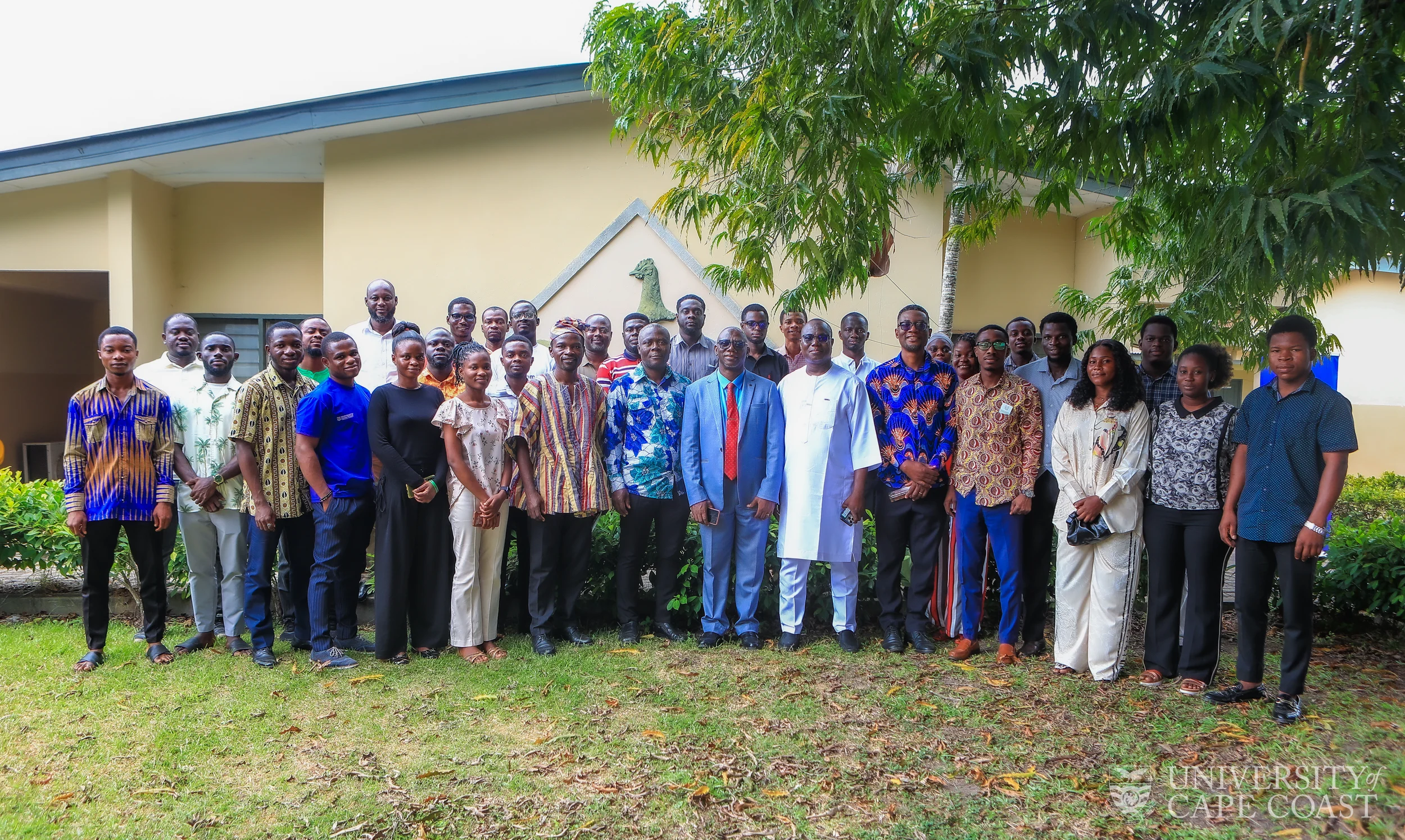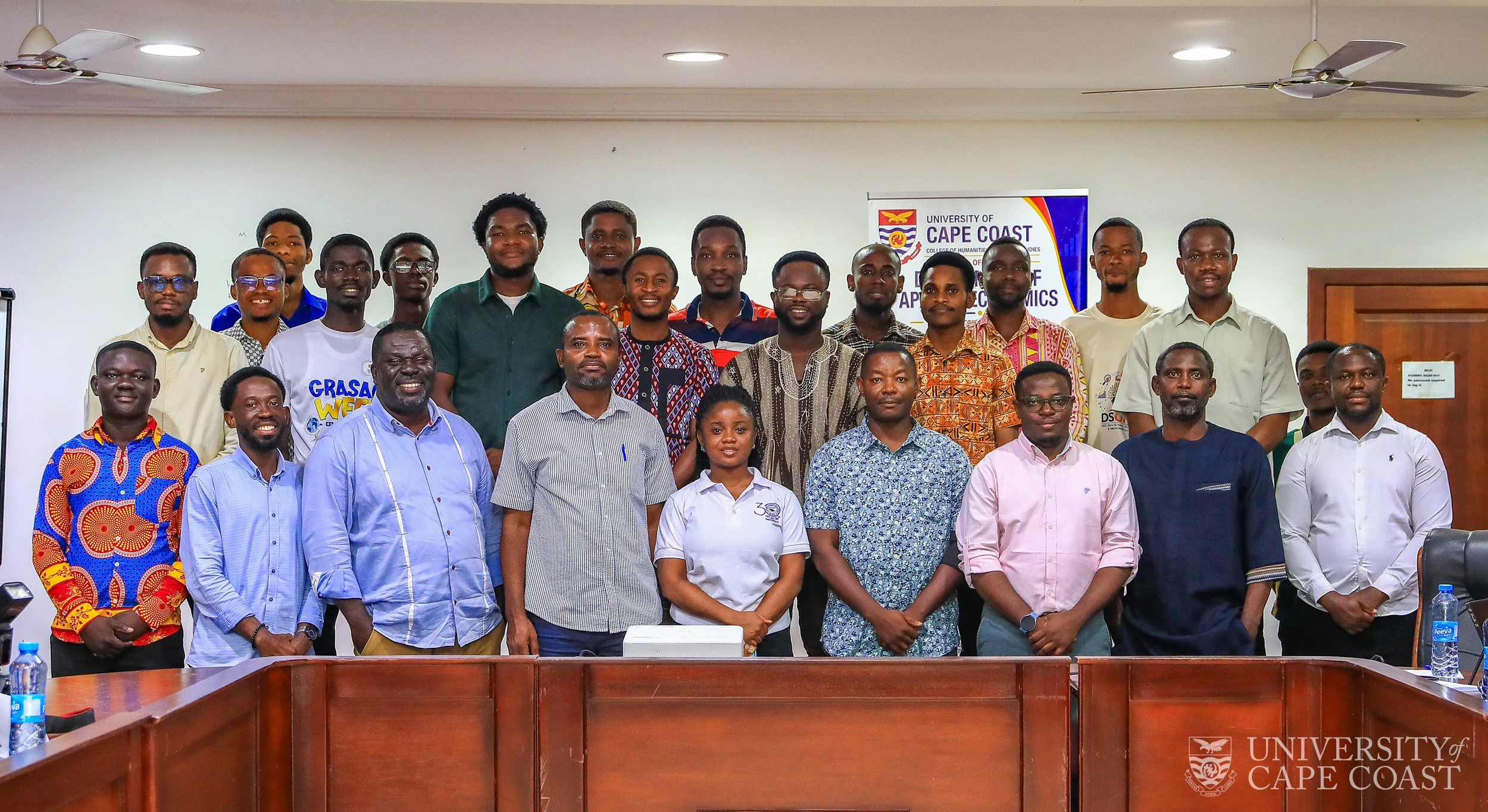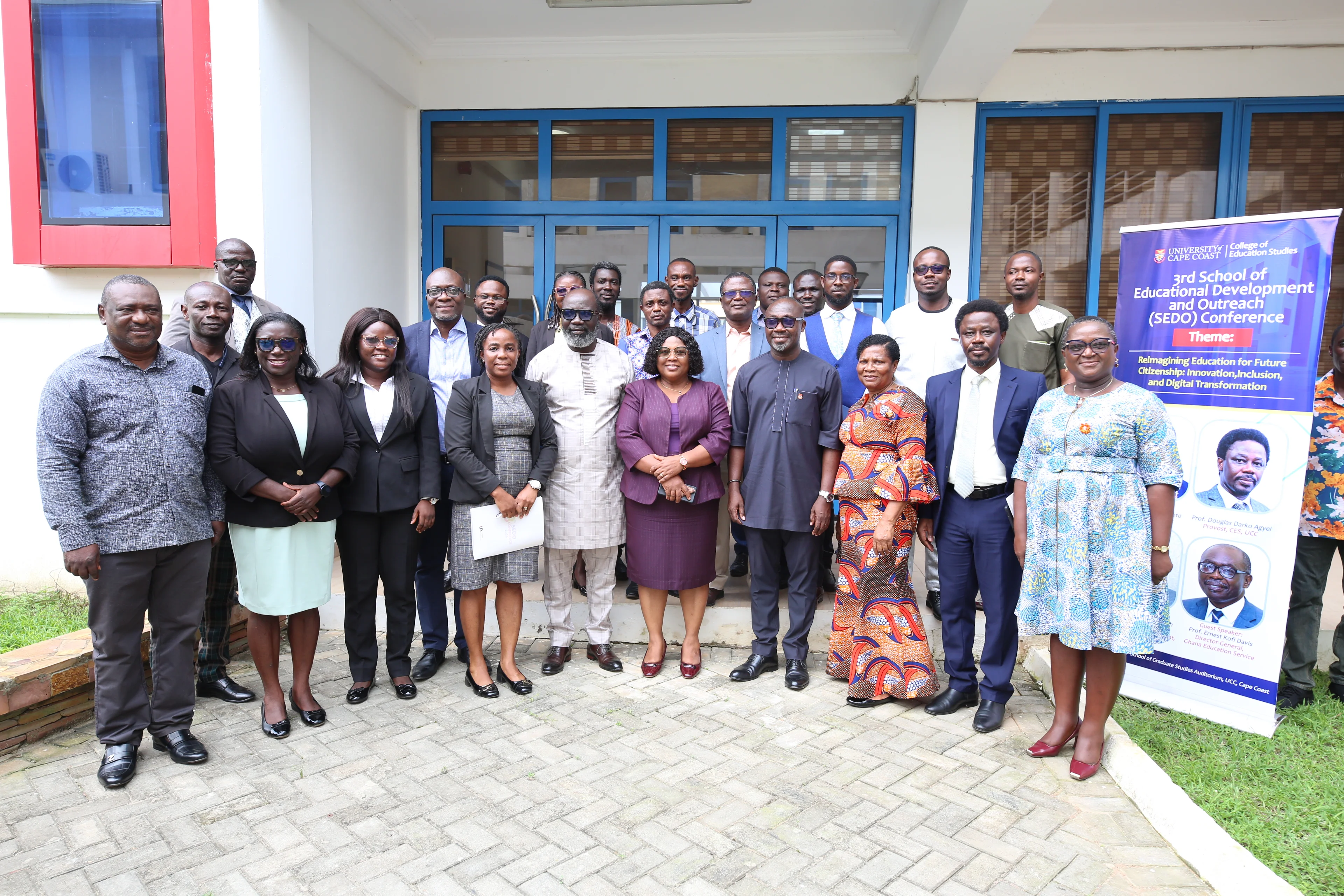
The University of Cape Coast (UCC) has hosted the 3rd Conference of the School for Educational Development and Outreach (SEDO) under the theme “Reimagining Education for Future Citizenship: Innovation, Inclusion, and Digital Transformation.”
The conference brought together education scholars, policymakers, researchers, practitioners, and other stakeholders to deliberate on emerging trends in education and explore innovative approaches to preparing learners for the demands of a rapidly changing world.
The 3rd SEDO Conference provided a platform for researchers and education professionals to share innovative ideas, strengthen collaborations, and help shape an education system capable of preparing learners for future opportunities and challenges.
Opening the conference, the Acting Vice-Chancellor of UCC, Prof. Denis Worlanyo Aheto, emphasised the collective responsibility of educators, researchers and policymakers to rethink educational policies, practices and systems to ensure that they remain responsive to contemporary global realities.
Prof. Aheto expressed the University’s appreciation for its collaboration with the Open University, United Kingdom, noting that the partnership had contributed significantly to strengthening teacher education, educational research and capacity-building initiatives in Ghana and across sub-Saharan Africa.
He indicated that education systems globally were confronted with complex challenges, particularly in preparing future generations of learners with the skills and competencies required to navigate an increasingly dynamic world.
The Acting Vice-Chancellor reaffirmed UCC’s position as a leading institution in teacher education, educational research and community outreach in Ghana and beyond. He noted that conferences such as SEDO provide important platforms for scholarly dialogue, knowledge exchange and collaborative problem-solving.
According to him, SEDO plays a significant role in advancing the University’s mission of professional development, community service and stakeholder engagement through research, innovation and outreach.
The Provost of the College of Education Studies, Prof. Douglas D. Agyei, underscored the enduring relevance of education despite rapid technological advancements. He noted that while technology continued to reshape societies, education must continuously evolve to remain relevant, impactful and transformational.
He stressed that modern education systems must equip learners with competencies beyond knowledge acquisition, including critical thinking, creativity, collaboration and digital innovation.
Prof. Agyei highlighted UCC’s leadership in educational research, curriculum development and innovation, stressing that the University’s expertise in education extends beyond its institutional boundaries through strategic partnerships, community engagement and knowledge sharing.
He expressed confidence that the quality of research papers and abstracts presented at the conference would generate valuable insights capable of informing educational policy and decision-making.
The Guest Speaker, Dr. Juliet Dufie Otami, who represented the Director General of Ghana Education Service (GES), commended participants for their intellectual engagement and described the conference theme as timely and forward-looking, given the educational challenges confronting societies globally.
She observed that the world had changed significantly due to artificial intelligence, technological advancement and evolving societal needs, requiring education to move beyond the traditional transmission of knowledge.
Dr. Otami explained that educational transformation was not accidental but required deliberate policies, motivated teachers, continuous professional development, access to digital learning resources and robust cybersecurity frameworks.
She noted that although several educational reforms had been introduced across the world, not all reforms had translated into meaningful transformation due to gaps between policy intentions and implementation realities.
She therefore called for stronger collaboration among stakeholders to bridge these gaps and encouraged institutions such as UCC to continue generating research-based solutions that connect educational policy with practice.
Delivering the keynote address, Prof. Eric Addae-Kyeremeh, Professor of Educational Leadership and Development at the Open University, United Kingdom, argued that future education systems must prioritise inclusion, digital transformation and citizenship development.
Prof. Addae-Kyeremeh stressed that inclusion should not exist merely as a policy aspiration but must become an everyday reality reflected in the experiences of learners and educators.
He noted that digital transformation must move beyond the provision of devices to the promotion of digital justice, where all learners have equitable access to digital resources, virtual laboratories and opportunities to participate meaningfully in the digital society.
According to him, effective digital transformation requires more than access to technology; learners and educators must develop the skills and competencies necessary to maximise the potential of digital tools.
He emphasised that education must transition from knowledge transmission to knowledge creation, arguing that future citizens require more than the ability to recall information. They must possess the capacity to solve problems, collaborate across boundaries, and contribute responsibly to society.
Prof. Addae-Kyeremeh identified key priorities for reimagining education, including strengthening inclusive learning environments, integrating digital transformation, promoting lifelong learning, developing future-ready skills, enhancing collaboration and preparing graduates for employment and responsible citizenship.
He further noted that citizenship in the modern era extends beyond national identity, as global challenges require individuals who can engage across borders, build responsible online communities and balance rights with responsibilities.
The two-day conference featured paper presentations and panel discussions on key sub-themes, including Early Childhood and Foundational Education; Education for Entrepreneurship, Innovation and Employability; Teacher Education and Professional Development; Curriculum and Instruction for 21st-Century Competencies; Assessment, Evaluation and Learning Analytics; STEM Education and ICT Integration; and Artificial Intelligence and Emerging Technologies in Education.