The Pro Vice-Chancellor of the University of Cape Coast (UCC), Professor Christine Adu-Yeboah, has called for stronger collaboration among universities, communities and other stakeholders to promote the prevention and control of hypertension in Ghana.
According to her, hypertension remains an important public health challenge that requires collective action from individuals, families, communities, traditional authorities, health facilities, educational institutions and other stakeholders.
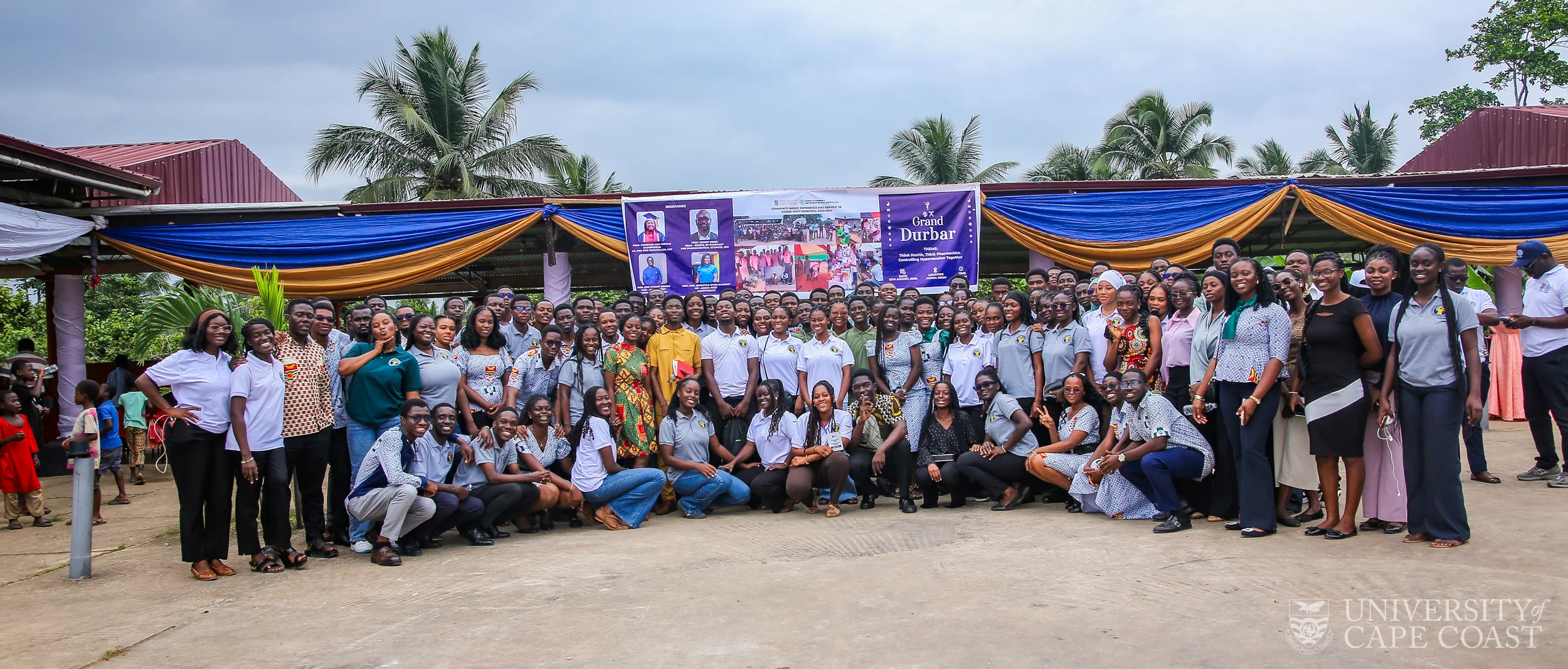
Prof. Adu-Yeboah made the call when she chaired a Durbar organised to mark the successful completion of the 2026 Community-Based Experience and Service (CoBES) programme undertaken by Doctor of Pharmacy students of the School of Pharmacy and Pharmaceutical Sciences at Agona Nyakrom in the Central Region.
The exercise, which was undertaken in fourteen communities within the Agona West Municipality, was held under the theme: “Think Health, Think Pharmacist: Controlling Hypertension Together.”
Prof. Adu-Yeboah said the CoBES programme provided students with an invaluable opportunity to move beyond the classroom and engage directly with communities to understand their health needs and apply their academic and professional knowledge to real-life situations.
She noted that meaningful university education should not be confined to the classroom, stressing that students must be equipped with the knowledge, skills and attitudes needed to understand and respond to the needs of the communities they would eventually serve.
“Pharmacy is not simply about medicines; it is also about people, health education, disease prevention, responsible use of medicines and improving health outcomes,” she said.
The Pro Vice-Chancellor explained that the CoBES programme was particularly important in the training of future pharmacists because it enabled students to appreciate the pharmacist's role within the wider healthcare system.
She said pharmacists had an important contribution to make to the prevention and control of hypertension through health education, medication counselling, promoting adherence to treatment and helping patients make informed decisions about their health.
Prof. Adu-Yeboah commended the Doctor of Pharmacy students for their participation in the exercise and urged them to reflect on the knowledge and experiences gained through their interactions with the communities.
She encouraged the students to develop the professional competence, empathy and sense of responsibility required of future pharmacists, emphasising that their responsibilities would extend beyond dispensing medicines.
“You will be healthcare professionals, educators, counsellors and advocates for the communities you serve,” she told the students.
Prof. Adu-Yeboah further stressed the importance of effective communication and an understanding of patients' needs in ensuring that pharmacists could respond appropriately to community health challenges.
The Pro Vice-Chancellor expressed appreciation to the traditional authorities, community leaders and members of the fourteen communities for welcoming the students and supporting the CoBES exercise.
She said the communities' cooperation demonstrated the importance of strong partnerships between academic institutions and the communities they serve.
Prof. Adu-Yeboah also commended the Dean and staff of the School of Pharmacy and Pharmaceutical Sciences, faculty members, supervisors, health professionals and other staff who supported the students throughout the exercise.
She urged the School to continue strengthening its community engagement activities and to use lessons and experiences from the CoBES programme to inform teaching, research and future community-based interventions.
According to her, the Durbar should not be viewed merely as the conclusion of a student field exercise but also as an opportunity to deepen the relationship between UCC and the communities within which it operates.
She said such partnerships could enable the University to deploy its knowledge, expertise and human resources to contribute meaningfully to addressing community health challenges.
Prof. Adu-Yeboah also encouraged community members to take an active interest in their health and make use of available health information and services.
She urged them to ensure that the message of the 2026 CoBES exercise continued beyond the Durbar and was sustained in homes, families and communities.
The 2026 CoBES exercise therefore provided the Doctor of Pharmacy students with practical community-based learning experiences while promoting awareness of hypertension prevention and control and highlighting the important role pharmacists can play in improving community health outcomes.
Prof. Adu-Yeboah encouraged all stakeholders to continue working together to promote healthier communities and achieve the objective of the year's CoBES theme.
For his part, the Dean of the School of Pharmacy and Pharmaceutical Sciences, Prof. Ernest Obese, said the Community-Based Education and Service (COBES) programme had provided pharmacy students with valuable hands-on experience to enhance their professional training.
He said the practical exposure would equip the students with the knowledge and skills needed to handle complex health conditions and provide effective pharmaceutical care after graduating from the University.
Prof. Obese added that the University of Cape Coast School of Pharmacy and Pharmaceutical Sciences remained committed to ensuring that the education and training of pharmacy students were responsive to the health needs of communities.
The event was attended by traditional authorities of Agona Nyakrom.