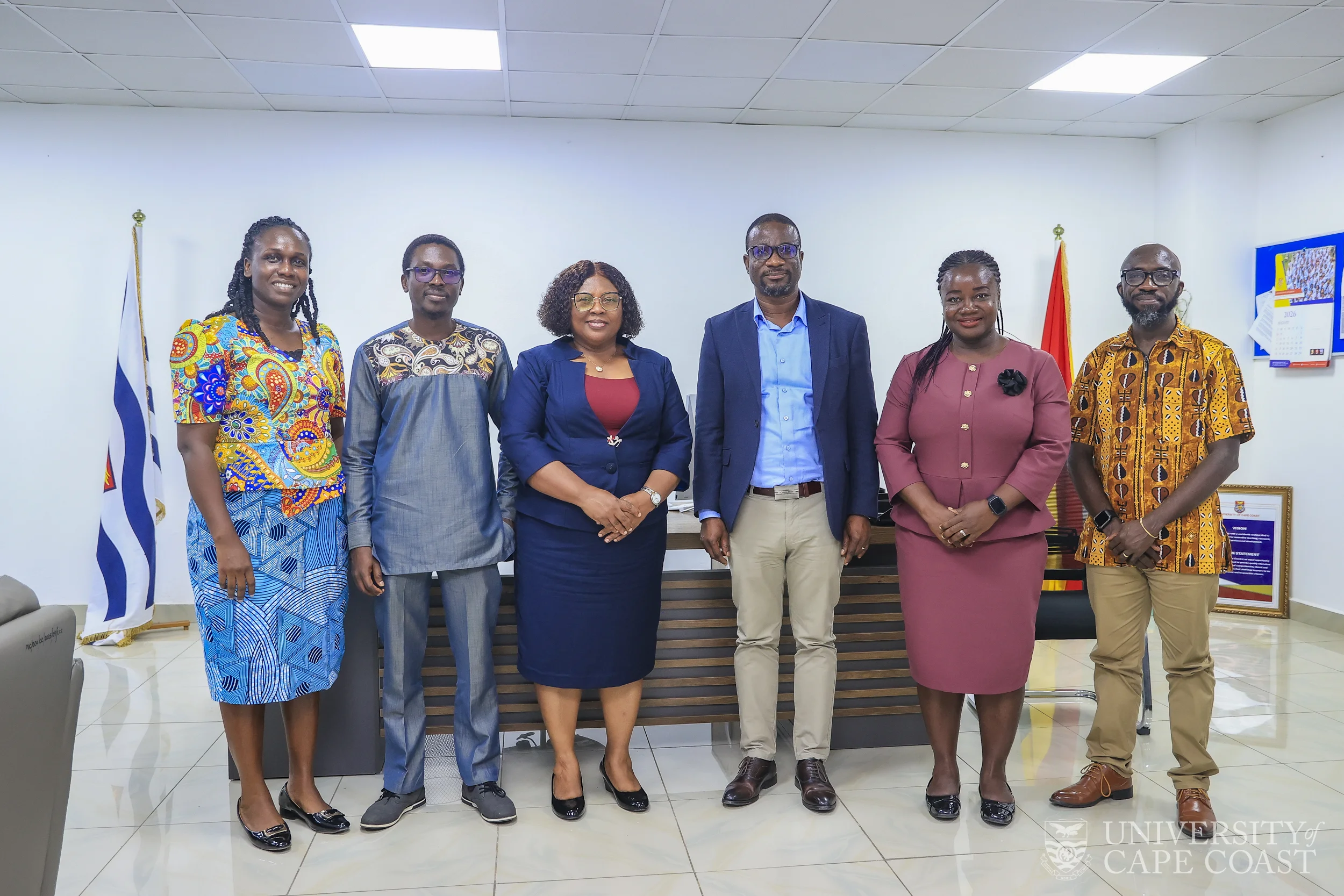
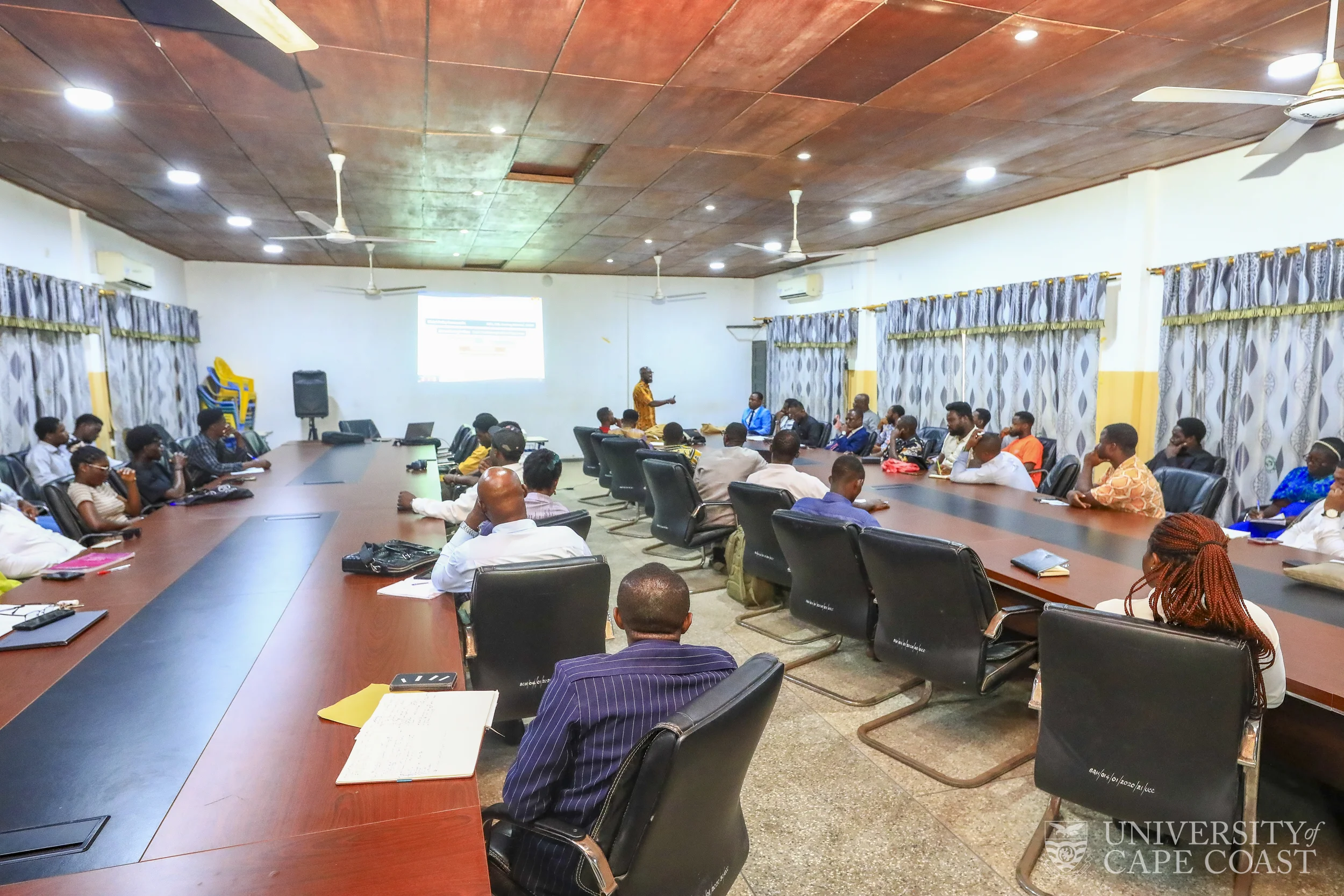
A three-day training workshop on Strengthening Capacity for Ocean Governance and Negotiating Fair and Sustainable Fisheries Access Arrangements in Africa has opened at the University of Cape Coast(UCC).
The workshop is being organized by the African Union-InterAfrican Bureau for Animal Resources (AU-IBAR) in collaboration with the Africa Union(AU) Centre of Excellence in Marine Fisheries and Coastal Zone Management at UCC.
The purpose of the three-day training workshop is to equip selected African Fisheries administrators with the necessary skills, knowledge and understanding of Oceans Governance that will contribute to building a sustainable core of experts.
It is also aimed at enhancing the ability of participants to successfully negotiate for granting access to fishing fleets, processing technologies, as well as related fisheries investments in order to promote equitable and sustainable access agreements in Africa.

Group photo of participants in the training workshop
The programme has converged participants from Kenya, Sudan, Nigeria, Cape Verde, Senegal, Tunisia, Djibouti, Mozambique, Madagascar, Ghana, AU-IBAR, amongst others. Other participants joined the workshop remotely.
Pro Vice-Chancellor of University of Cape Coast (UCC), Prof Rosemond Boohene, who opened the ceremony, lauded the African Union for creating the Centre of Excellence under the Department of Fisheries and Aquatic Sciences at UCC.
She said the workshop would "enormously benefit African Union member states in improving food security, livelihoods and wealth creation in sustainable fisheries and aquaculture."
Prof Boohene, who chaired the event, was of the hope that the workshop would be beneficial to member countries since they would share ideas based on their common goals to help develop and promote best practices to sustain the sector.
Pro VC of UCC, Prof. Rosemond Boohene, opening the workshop
The Pro Vice-Chancellor commended participants for responding positively to the workshop and said at the end, participants would have a positive direction to properly steer the affairs of the industry.
In her remarks, the Representative of AU-IBAR, Madam Patricia Lumba, indicated that the AU had developed a Policy Framework and Reform Strategy (PFRS) for fisheries and aquaculture in Africa to curb exploitation.
According to her, the PFRS incorporated best practices for sustainable fisheries management and responsible aquaculture development which had been identified as priorities by stakeholders.
She added that over exploitation of fish stock in Africa by foreign fishing vessels had resulted in the destruction of the marine ecosystem and bio-diversity. She observed that the industry contributed substantially to the African economy, which offered decent jobs and sustained livelihoods.
Representative of AU-IBAR, Madam Patricia Lumba addressing participants
Madam Lumba stressed that "well-managed oceans are crucial for achieving sustainable development and a critical component of the Africa integrated marine strategy that contributes to Agenda 2063 of the AU."
Source: Documentation and Information Section-UCC