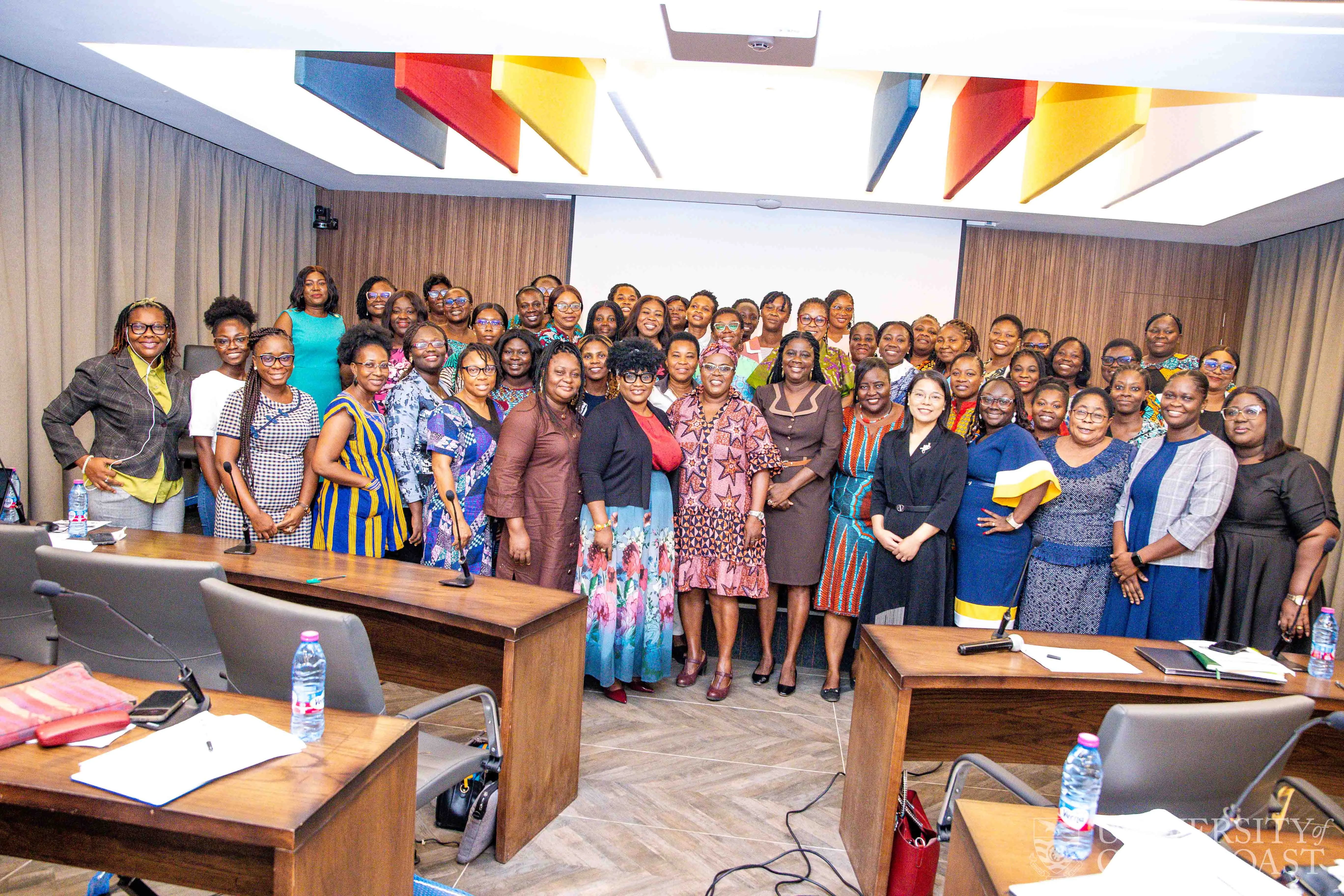
The College of Humanities and Legal Studies (CHLS), in collaboration with the Ecosystem-Based Management of Coastal Marine Resources in Ghana, Indonesia and Vietnam (ECOGIV), has held a three-day capacity-building workshop aimed at equipping female lecturers with the leadership skills, mentorship, and networking opportunities needed to thrive in academic and leadership positions.
The training was on the theme: " Building Women's Capacity for High-Impact in Teaching, Research, and Institutional Leadership."
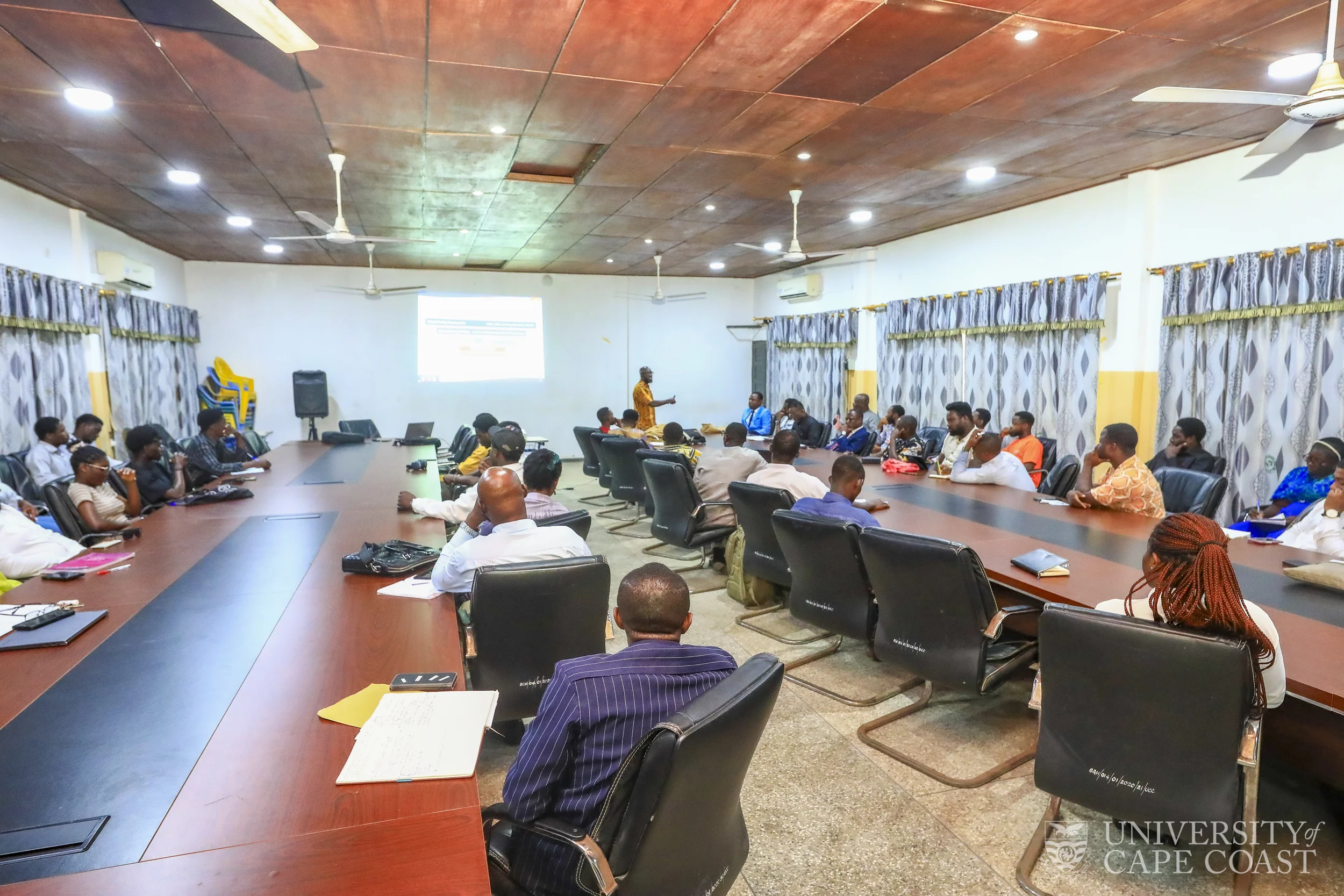
The workshop, held in the New Academic Board Chamber, brought together 50+ women from across the College. It also attracted nine resource persons who presented on topics including Grantsmanship, Publication Strategies and Journal Selection, Mastering AI for Research, Data Management and Open Science, Institutional Transformation and Policy Reform, Mentorship, Networks and Leadership Development, and Gender, Structures and Inequality in Academia.
Speaking during the workshop, the Provost of the College of Humanities and Legal Studies, Prof Daniel Agyapong, said the programme was part of his vision for the College to build the capacity of female lecturers in research, teaching, grantmanship and leadership.
He said the workshop aimed to build the capacity of more women to close the academic rank gap and support women in occupying leadership positions at the College and the University. The Provost said it marked the start of a series of training programmes for women across the College to equip them with the requisite skills. He indicated that the College aims to institutionalize this women's capacity initiative.
Prof. Agyapong said CHLS’ women were endowed with many skills and intellect, which, when developed, could be of great benefit to the College in particular; thus, the decision to help them upgrade their knowledge and skills.
In a Zoom presentation, the High Commissioner of Ghana to Canada, Her Excellency Prof. Dora Francisca Edu-Buandoh, emphasised the need for women to continue to take up leadership positions and contribute meaningfully to decision-making processes at the University.
She urged women to rise above social and cultural barriers to embrace leadership roles in a rapidly evolving world dominated by Artificial Intelligence (AI) and robotics.
Her Excellency addressed the unique challenges that prevent women from stepping into leadership positions.
Prof. Edu-Buandoh encouraged women to understand that leadership was not defined by positions or titles but by teamwork. "Success depends on collaboration, transparency, and a shared commitment to continuous improvement," she added.
She urged them to consult always in their endeavours and advised them to “encourage one another to succeed”. She expressed optimism that as women strive to take on leadership roles in the College, this would encourage others to take on responsibilities to promote the growth of CHLS.
She pointed out that Institutional Transformation and Policy Reform were critical for the College and UCC to enable it to remain competitive, impactful and relevant. "Reforms should be guided by the UCC's mission, vision, and commitment to academic excellence."
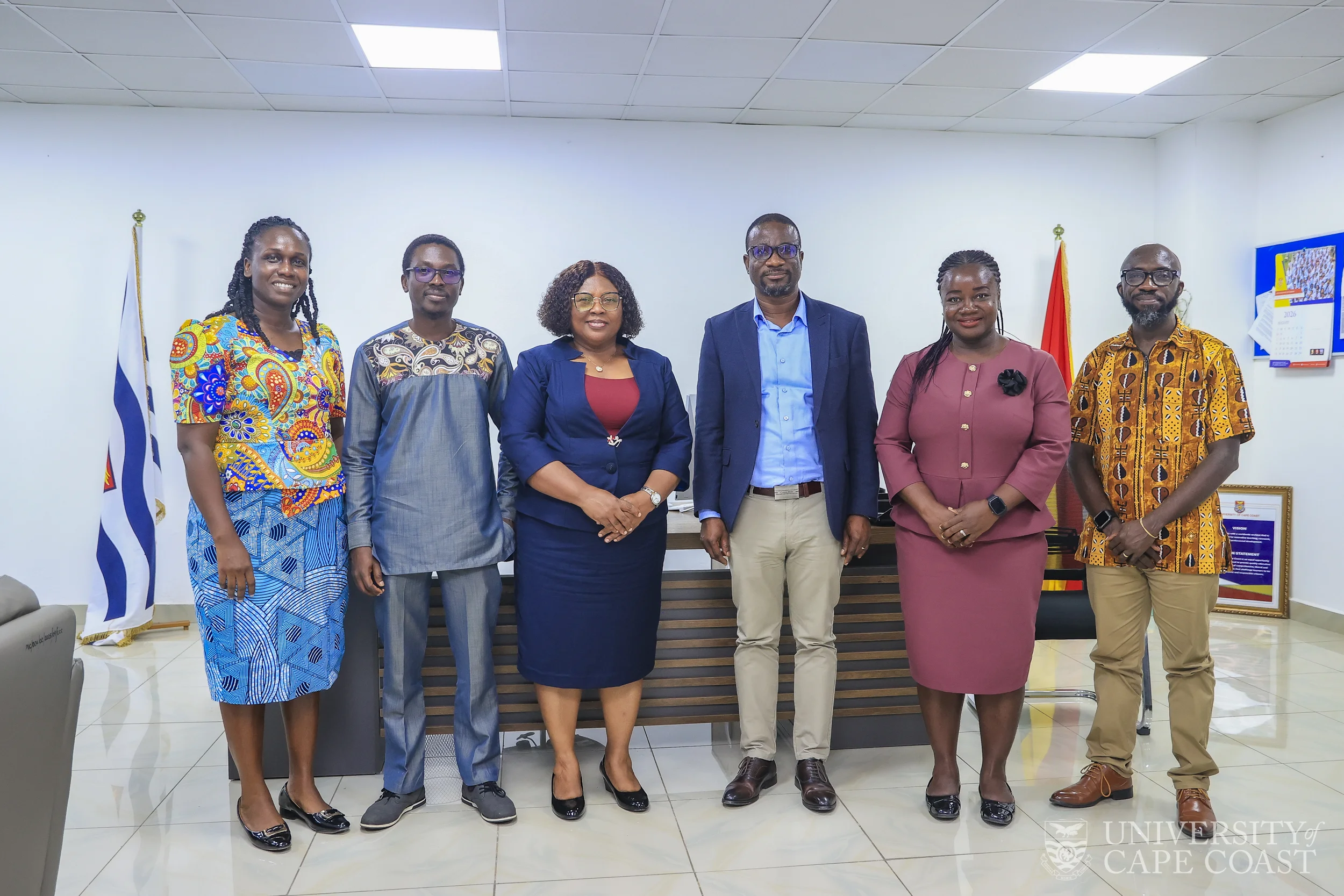
The workshop was also attended by the College Registrar, Mr Ebenezer Aggrey, Professor Dorcas Obiri-Yeboah; the incoming Provost of the College of Health and Allied Sciences, the Dean of the School of Business, Professor Samuel Kwaku Agyei; Professor Emmanuel Ekow Asmah, Head of Data Science and Economic Policy; and Professor Isaac Dasmani, Dean of the School of Economics. Others included Lawyer Selma Ayeetey, Dean of the Faculty of Law; Professor Eunice Fay-Amissah, Director of the Centre of Gender Research, Advocacy and Documentation; and Dr Gloria Essilfie, the Workshop Coordinator and a project member of ECOGIV. Other facilitators present were Professor Gloria Agyapong, Head of Marketing and Supply Chain Management; Professor Nana Yaw Oppong, Department of Human Resource Management; and Dr William Cantah, Coordinator of the Centre for Data Archiving, Management, Analysis, and Advocacy (C-DAMAA).