A Global Health Specialist at PI Choice, Professor Zulfiqar Bhutta, has called on health actors within Ghana’s health sector to devise innovative approaches for sustainable domestic health financing to help address the post–Sustainable Development Goals (SDGs) era.
According to him, it is crucial for government, academia, and the private sector to work together—especially with think tanks—to sustain their initiatives even after the conclusion of the SDGs in September 2030.
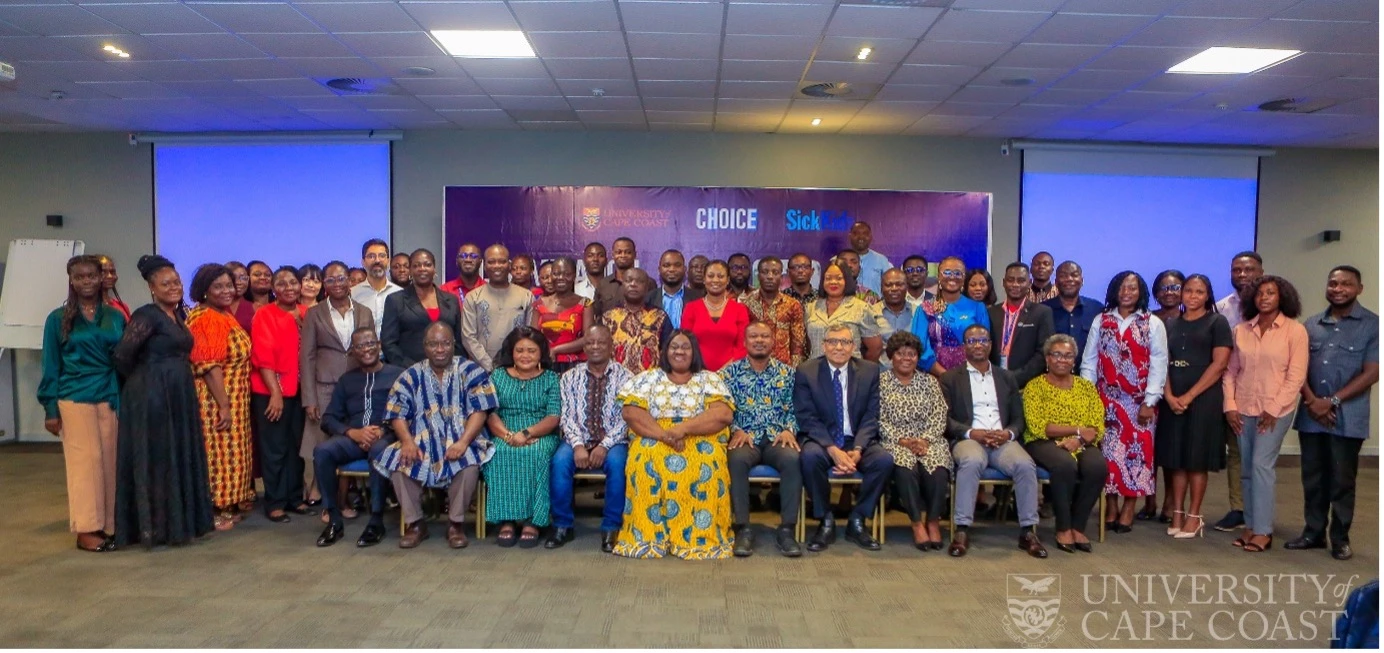
He was speaking at a dissemination workshop on the attainment of the Health and Health-related Sustainable Development Goals (HHSDGs) in Ghana, themed: “Advancing Progress Towards the Attainment of HHSDGs: The Role of Multisectoral Think Tanks.”
Professor Bhutta stated that African countries should not rely on high-income regions such as Europe and North America to fund think tanks beyond the SDG period.
He indicated that the SDGs are interrelated and that focusing beyond SDG 3, while strengthening linkages with other health-related SDGs, would not only improve health and well-being but also significantly contribute to achieving other SDGs.
He admitted that Ghana and other countries are not on track to meet the HHSDGs.
He continued, “Advancements are being hampered by population growth, urbanisation, COVID-19, gender, social and economic inequalities, and climate change, all of which threaten public health gains globally and further worsen nutrition and health outcomes.”
He maintained that addressing the HHSDGs in the face of these multidimensional threats requires a collaborative and multisectoral strategy.
According to him, all stakeholders — including funders and governments —must work together to develop coordinated action plans and address implementation challenges, particularly through collaboration across disparate sectors.
Speaking on political commitment, he noted that commitment to the SDGs has been demonstrated through national-level policies, programmes, and strategies targeting both the general population and vulnerable groups.
Professor Bhutta commended Ghana for adopting a decentralised approach to implementing the SDGs, stating that it helps address local needs and enhances relevance and effectiveness.
Regarding the challenges ahead, he noted that achieving the SDGs by 2030 remains a daunting task, particularly in low-resource and conflict-affected areas.
He added that the COVID-19 pandemic, armed conflicts, rising living costs, and climate change have further hindered progress on the SDGs, a situation exacerbated by cuts in global development assistance.
He also pointed out that effective monitoring is constrained by weak data systems, stressing the urgent need for improved data collection and management to track progress towards the SDGs.
For his part, the Convener of the HHSDGs Think Tank Ghana, Prof. Frederick Ato Armah, said the path to achieving the health-related SDGs in Ghana by 2030 was narrow, but still open.
He said it requires political leadership, sustainable financing, institutional coordination, and public trust, as well as placing people at the center of development.
“Let us recommit to building a Ghana where no woman dies giving life, where no child is left behind due to preventable illness, and where health is recognized not as a cost, but as a national investment in our collective future,” he added.
He used the opportunity to express gratitude to the institutional members of the HHSDGs Think Tank for their unflinching commitment to the initiative.
He affirmed the resolve of the Think Tank to support national efforts through rigorous analysis, honest dialogue, and evidence-based solutions.
On his part, the Country Lead for HHSDGS, Prof. David Teye Doku, said their goal was to facilitate the exchange of knowledge, ideas, and best practices to tackle pressing issues in areas such as climate change and sustainability, as well as health and well-being.
He said Ghana’s progress towards the attainment of five HHSDG goals (2, 3, 5, 6, and 13) had been assessed to determine the level of progress based on their cumulative targets and indicators.
“Ten per cent of SDG 2 has been achieved, while 10 per cent is on track to achieve the HHSDGs,” he added.
Prof. Doku was, however, quick to add that 50 per cent of the goals required acceleration for their targets to be achieved, stressing that close to 30 per cent of the goals had data gaps.