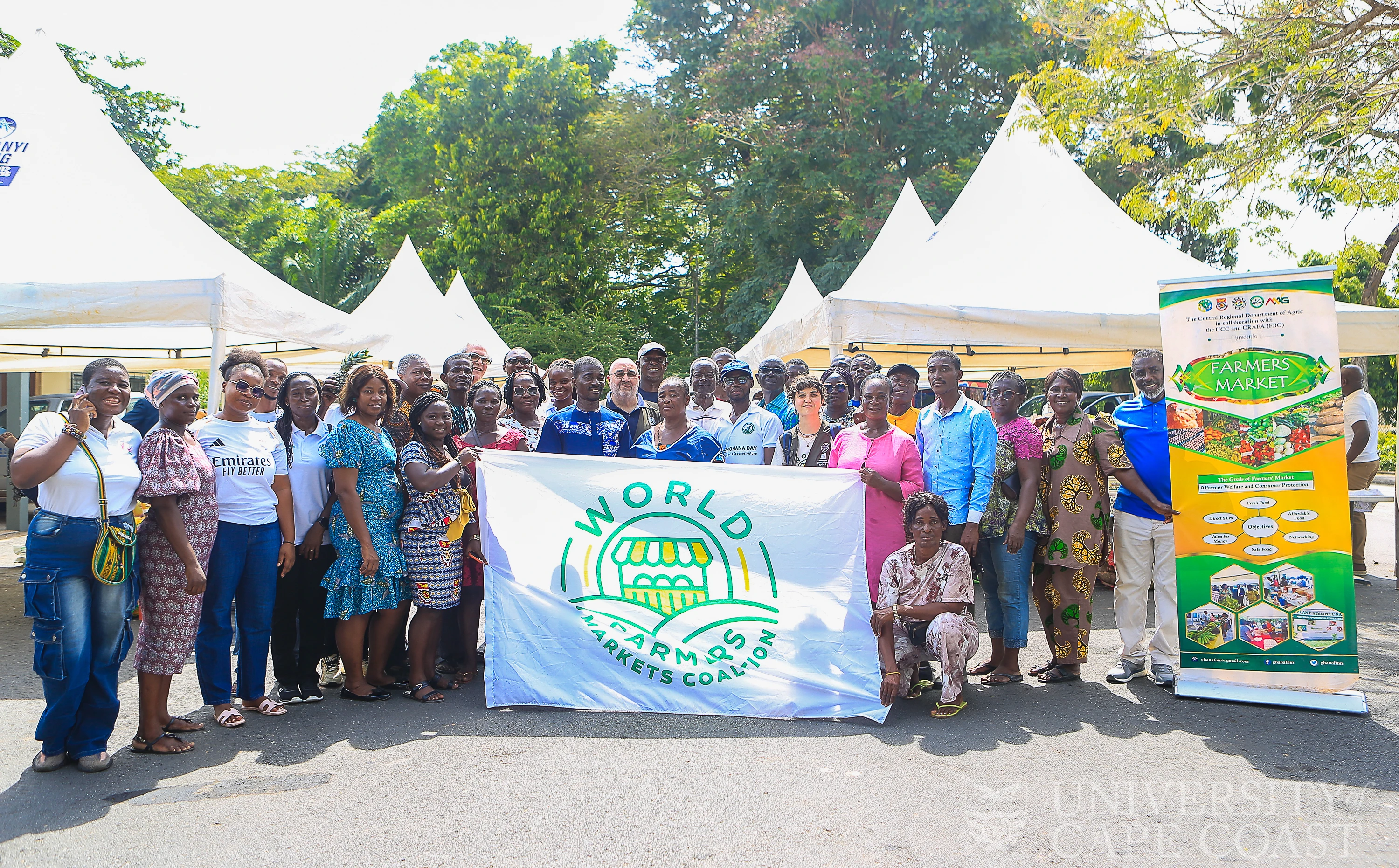
Stakeholders have called for intensified public awareness and policy support to promote farmers markets as a viable avenue for delivering fresh, safe, and quality food directly to consumers.
They made the call during a workshop held alongside farmers market in front of Sasakawa Centre, University of Cape Coast.
The participants argued that expanding awareness of farmers markets would not only improve access to nutritious food but also strengthen local food systems by creating reliable outlets for farmers to sell their produce at fair prices.
According to them, this approach would help farmers secure better returns on their investments and reduce post-harvest losses, which remain a persistent challenge in Ghana’s agricultural sector.
They were, however, quick to clarify that farmers markets are not intended to replace or compete with traditional markets. Instead, they described the initiative as a complementary or parallel market system designed to bridge the gap between producers and consumers while enhancing efficiency in the food supply chain.
The workshop brought together a broad spectrum of stakeholders, including farmer groups, district directors of education, representatives from the Central Regional Coordinating Council, and members of academia.
Discussions focused on strategies to integrate farmers markets into local communities, including schools, and the potential for these markets to support nutrition education and healthy eating habits.
The event was presided over by officials from the World Farmers Markets Coalition, WFMC including, President, Richard McCarthy, Director General, Carmelo Troccoli and Board Representative for Sub-Saharan Africa, Dr. Selorm Akaba.
They emphasised the global relevance of farmers markets in promoting sustainable agriculture and local economic development. They engaged participants on best practices from other countries and highlighted the importance of stakeholder collaboration in ensuring the success of such initiatives.
As part of the workshop, a team from the World Farmers Markets Coalition outlined practical steps for establishing and managing farmers markets in Ghana. These included stakeholder coordination, quality assurance mechanisms, branding and marketing strategies, and capacity-building for farmers to meet consumer expectations.
Featuring at the farmers’ market held in front of the Sasakawa Centre, farmers from selected districts in the Central Region showcased and sold a wide variety of products. The produce included fresh fruits and vegetables alongside processed items such as packaged foods and agro-based products. The market drew members of the university community as well as the general public, creating a direct and vibrant interface between producers and consumers.
Participants expressed optimism that with the right institutional backing and sustained public education, farmers markets could significantly transform local food distribution systems, empower smallholder farmers, and improve livelihoods across the Central Region and beyond.
About WCFM
The World Coalition of Farmers Markets (WCFM) is a global network that brings together farmers’ market organizations, managers, farmers, and supporters to strengthen local food systems and promote sustainable agriculture. It was established to provide a unified platform where farmers’ markets from different countries can collaborate, share knowledge, and advocate for policies that support smallholder farmers and local producers.
The coalition focuses on enhancing the visibility and impact of farmers’ markets as vital spaces for direct marketing, community engagement, and food security. By encouraging best practices, capacity building, and international partnerships, WCFM helps improve market management, food safety standards, and economic opportunities for farmers.