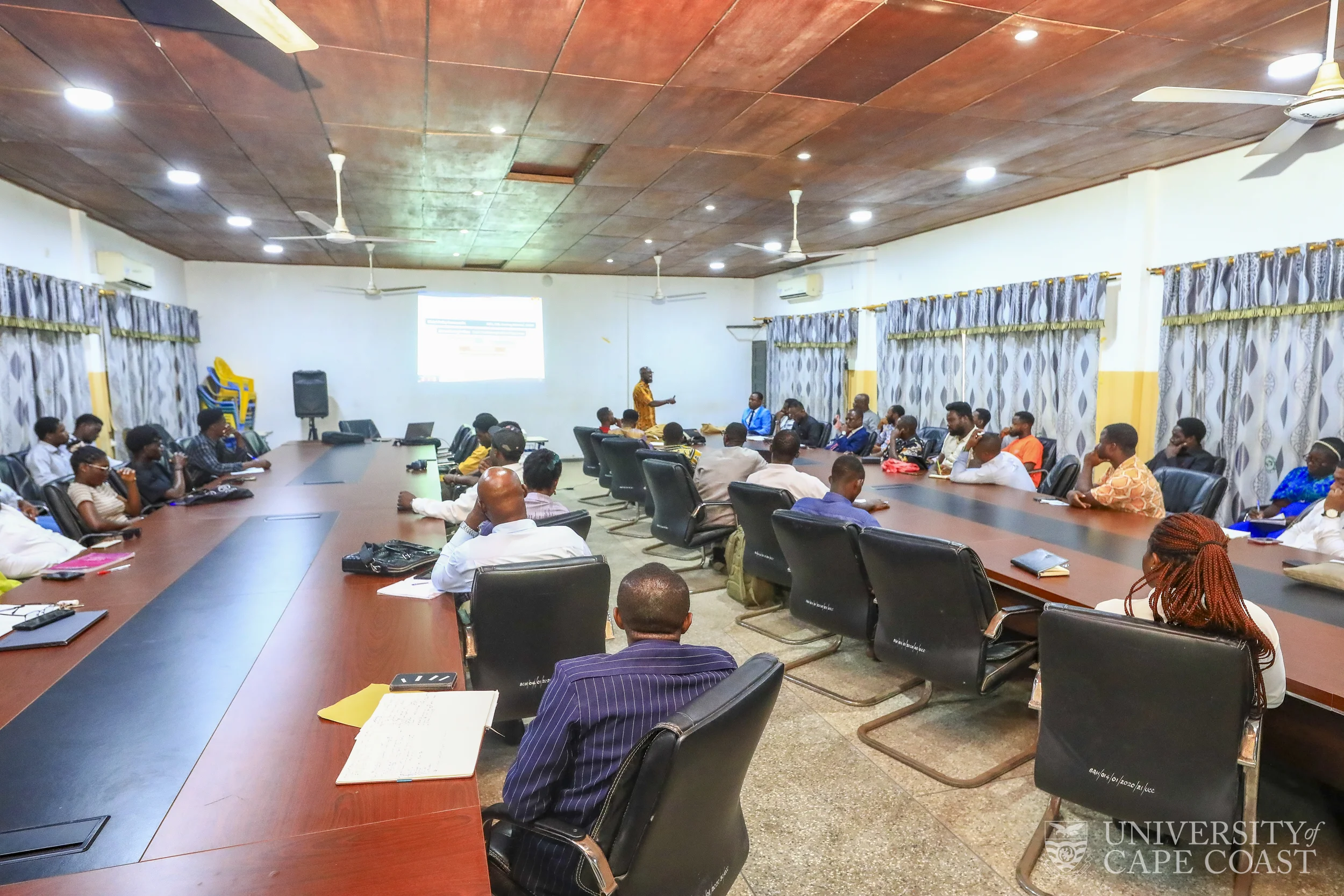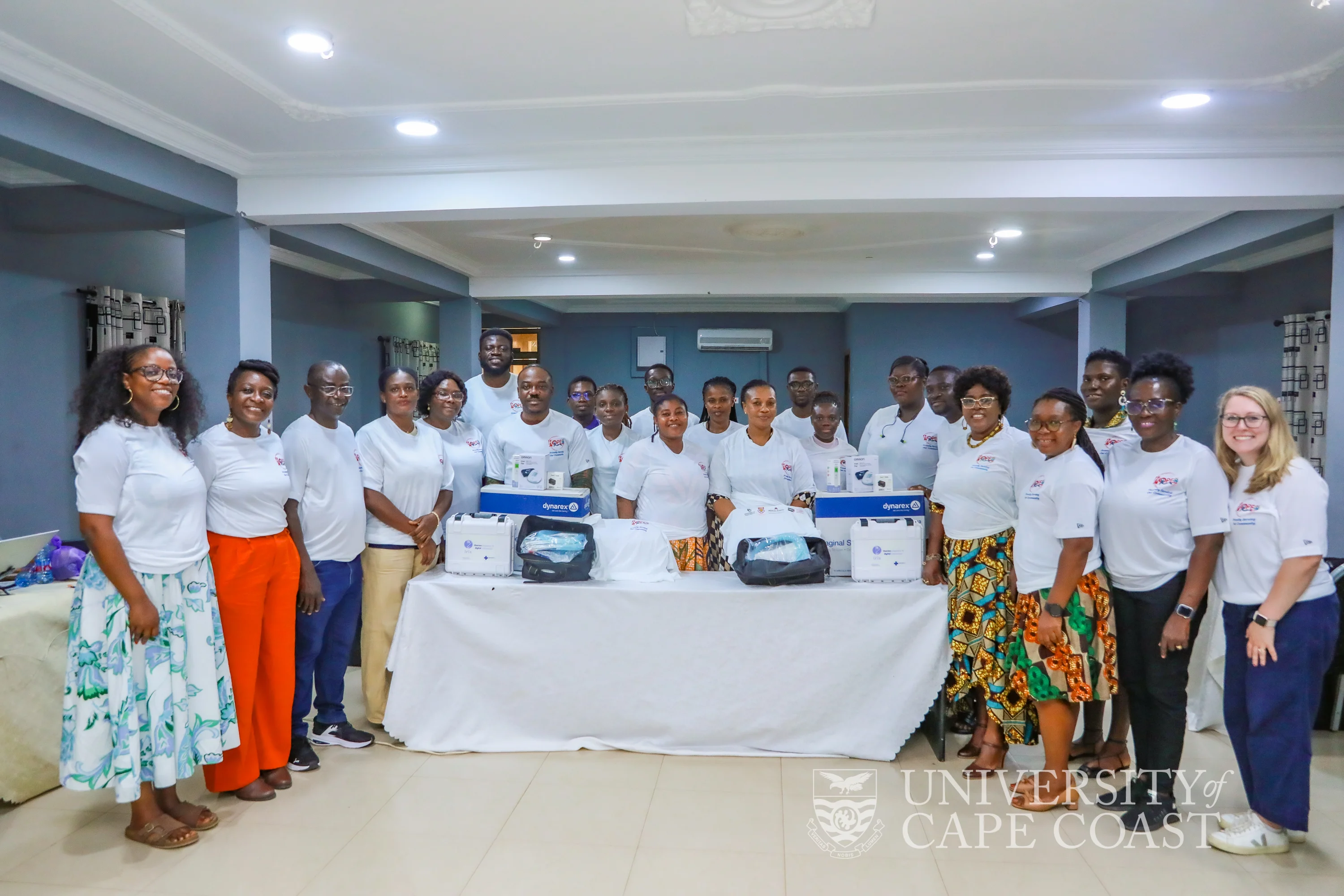
Healthcare professionals from the Swedru Municipal Hospital, and St. Francis Xavier Catholic Hospital in Assin Fosu, gathered at the Samrit Hotel in Cape Coast for a two-week training programme on setting up comprehensive cervical cancer prevention services at their facilities.
The training is part of the HOPE-in Ghana (HOPEinG) Project, a five-year project focused on improving cervical cancer screening uptake and treatment outcomes, particularly among women living with HIV.
Speaking at the opening ceremony, the Principal Investigator in Ghana, Prof. Dorcas Obiri-Yeboah of the School of Medical Sciences, University of Cape Coast, expressed concern over the low uptake of cervical screening in the country despite the disease being one of the leading causes of cancer-related deaths among women.
"Cervical cancer is preventable and manageable when detected early," she said. "Unfortunately, many Ghanaian women seek medical care at advanced stages of the disease, which significantly reduces their chances of survival."
She attributed this to fear and stigma, financial barriers, lack of awareness, and limited access to screening services.
The Principal Investigator indicated that the training was designed to equip healthcare providers with the knowledge and skills needed to support cervical cancer prevention strategies and build sustainable services within their facilities.
" Cervical cancer is preventable and manageable when detected early," she continued.
She was, however, quick to add that " Unfortunately, many Ghanaian women seek medical care at advanced stages of the disease, which significantly reduces their chances of survival."
Prof. Obiri-Yeboah urged healthcare workers to intensify community education efforts.
Prof. Nadia Sam-Agudu of the University of Minnesota, a Co-PI on the project, told participants that women living with HIV are six times more likely to develop cervical cancer than women without HIV.
She said the HOPE intervention combines HPV self-sampling, patient education based on the 3R communication model , and patient navigator support to address the cervical screening gap in Ghana.
Prof. Matthew Asare, the lead PI from Baylor University, spoke on global efforts to eliminate cervical cancer.
He noted that HPV, the virus responsible for most cervical cancer cases, spreads through sexual intercourse and skin-to-skin contact involving the genital and oral regions.
He called on health workers to strengthen advocacy, communicate health information in local languages, and actively counter misinformation surrounding cervical cancer.
The HOPE in Ghana Project is a partnership involving the University of Cape Coast, the University of Minnesota, and Baylor University, with national and regional collaborators from the Ghana Health Services. The project is funded by the National Institute of Health (NIH), USA.
Since the project's inception, 80 healthcare workers have received this comprehensive capacity-building. In addition, the project has donated equipment valued at $ 27,000.00 to the four facilities. These include consumables for cervical screening, headlamps, digital colposcopes, thermal alblative and LEEP equipment and other supportive equipment, including digital BP apparatus, thermometers and pulse, thermometers and pulse oximeters.
Source: Documentation and Information Section-UCC