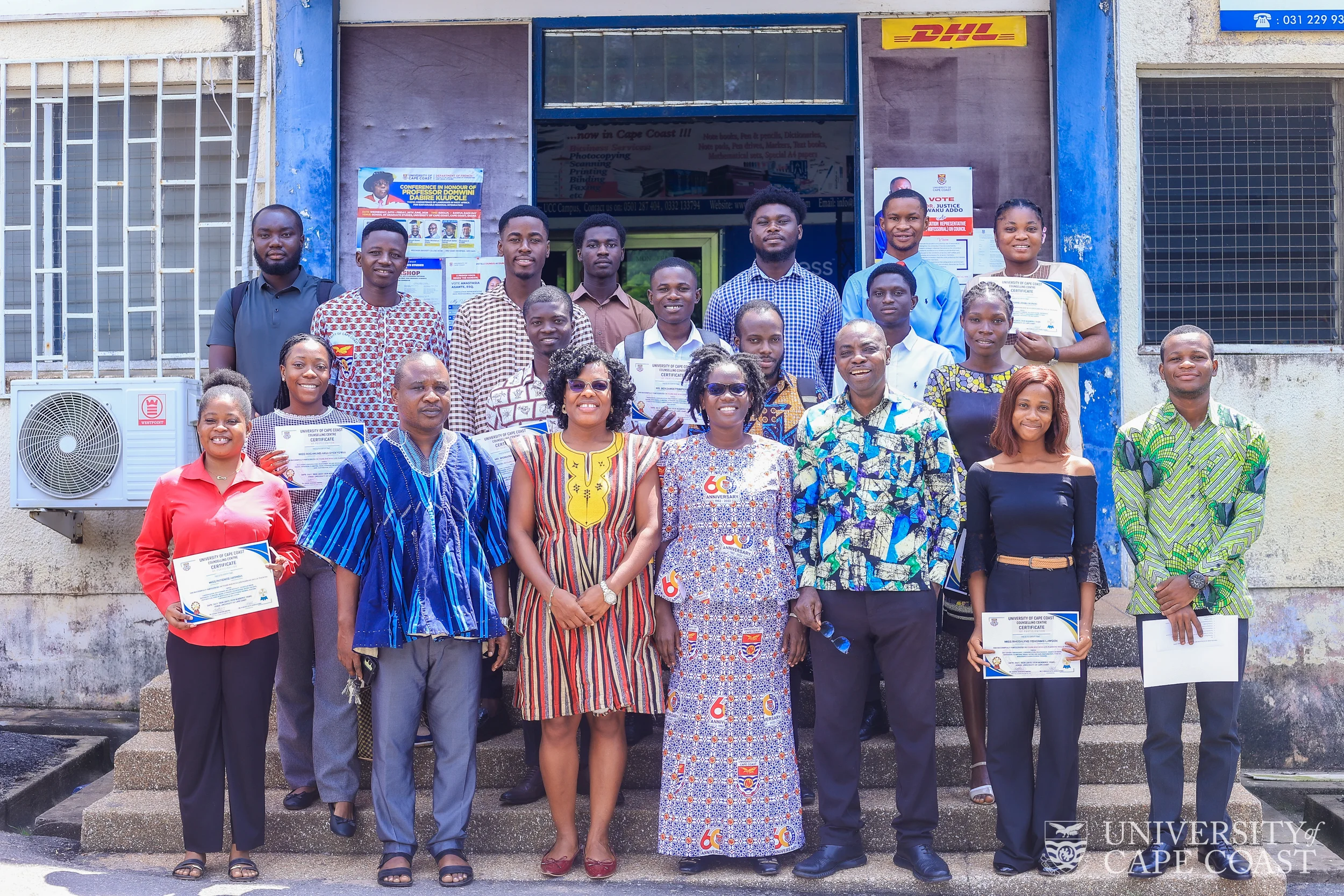
Twenty-five para counsellors have graduated from the Young and Wise programme organised by the Counselling Centre of the Faculty of Educational Foundations of the University of Cape Coast.
The programme, which began in 2004, was designed to equip students with the tools and knowledge to counsel their peers on campus.
The 12-month free training programme covered topics including depression, anxiety disorders, CV writing, sexually transmitted infections and human temperament.
The other areas covered were skills of communication, dating and date rape, and homosexuality, among others.
These topics were tailored to ensure that the graduates used their newly acquired skills and expertise to play useful roles in society.
The students, who are not professional counsellors but first aiders in counselling services, were given certificates as a form of recognition.
Addressing the gathering, the Director of the Counselling Centre, Dr. Eugene Kwarteng-Nantwi, congratulated the students on their graduation.
He charged them to use the knowledge acquired to the benefit of their peers, and where necessary, they should turn to professional counsellors at the Counselling Centre for support instead of relying on friends when facing personal challenges.
By equipping individuals to manage their emotions, identify misinformation and approach political differences without animosity, he said para- counsellors played a critical role in maintaining harmony.
He highlighted the dangers of peer pressure, noting that some students succumb to negative influences that can affect their academic performance and future development.
“Counsellors are professionals who guide people to achieve their aims and reach self-actualisation,” he said, adding that students who seek guidance can better navigate stresses and make informed decisions about their lives.
He encouraged all stakeholders, including parents, guardians, and educators, to actively support counselling initiatives in schools.
“To our learners, counselling is here for you. It is here to help you discover your strengths, navigate challenges, make wise choices, and confidently prepare for your future,” he said.
“When we invest in counselling, we invest in the future of every learner.”
For her part, the coordinator of the programme, Dr. Florence Ruth Ntreh, admonished them to eschew all forms of unethical lifestyles and rather be hardworking and disciplined.
She used the occasion to appeal to heads of educational institutions to intensify counselling sessions for students.
According to her, counselling plays a vital role in the development of students, serving as a tool to manage mental health issues such as anxiety and depression, and empowering people to lead healthy and fulfilling lives.
The Vice-Dean of the Faculty of Educational Foundations, Prof. Andrews Cobbinah, advised the lay counsellors to maintain confidentiality when discussing sensitive issues with their peers during counselling sessions.
This, according to him, would build the trust of their colleagues in them and help in handling mental, social and other issues confronting their peers while they continue with their education.
He said the mission of the Counselling Centre was to ensure every student felt understood and supported through life complexities.
The Vice-Dean urged students to engage professional counsellors at the Counselling Centre to discuss issues when confronted by challenges instead of resorting to others who might give them wrong information.
Source: Documentation and Information Section-UCC