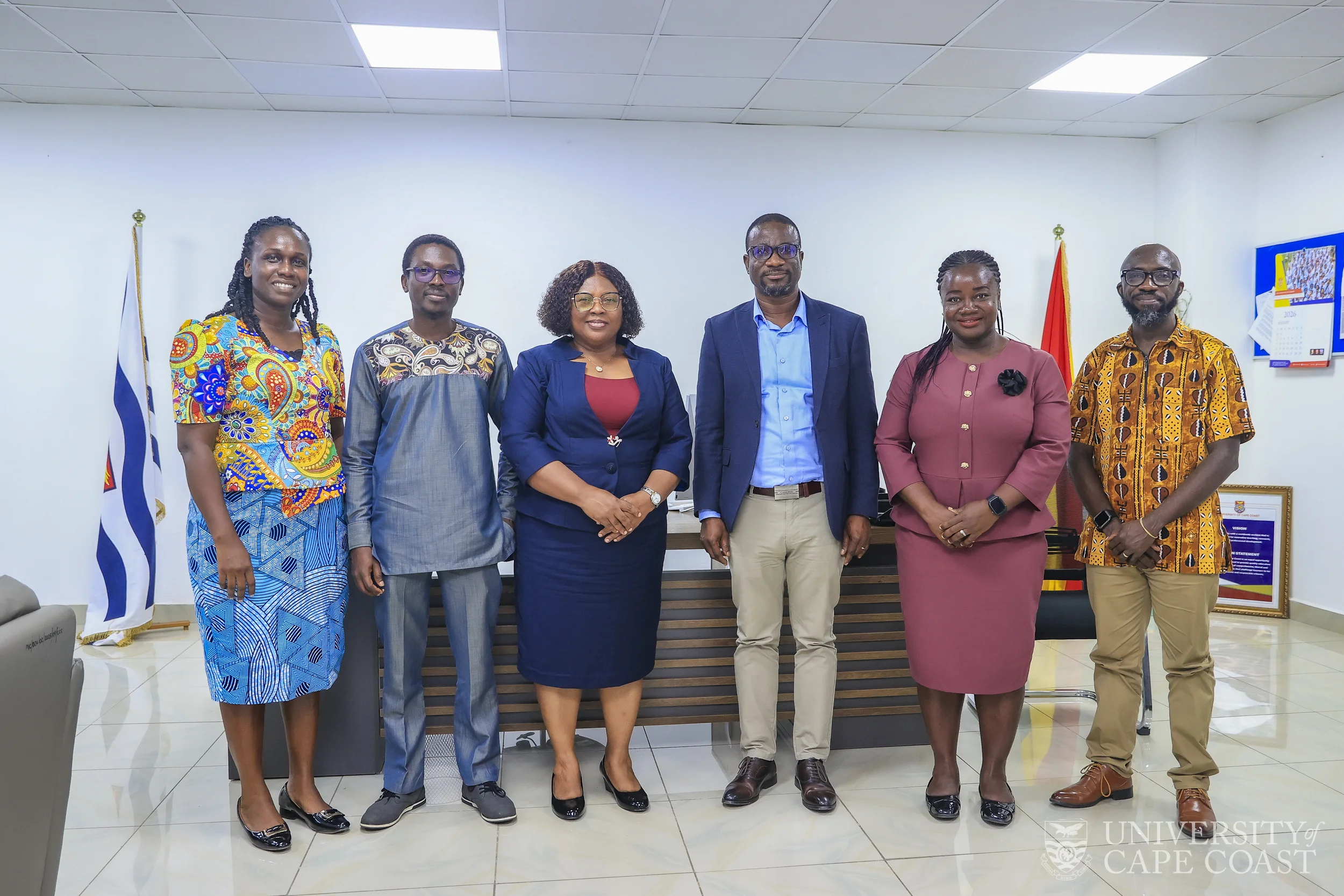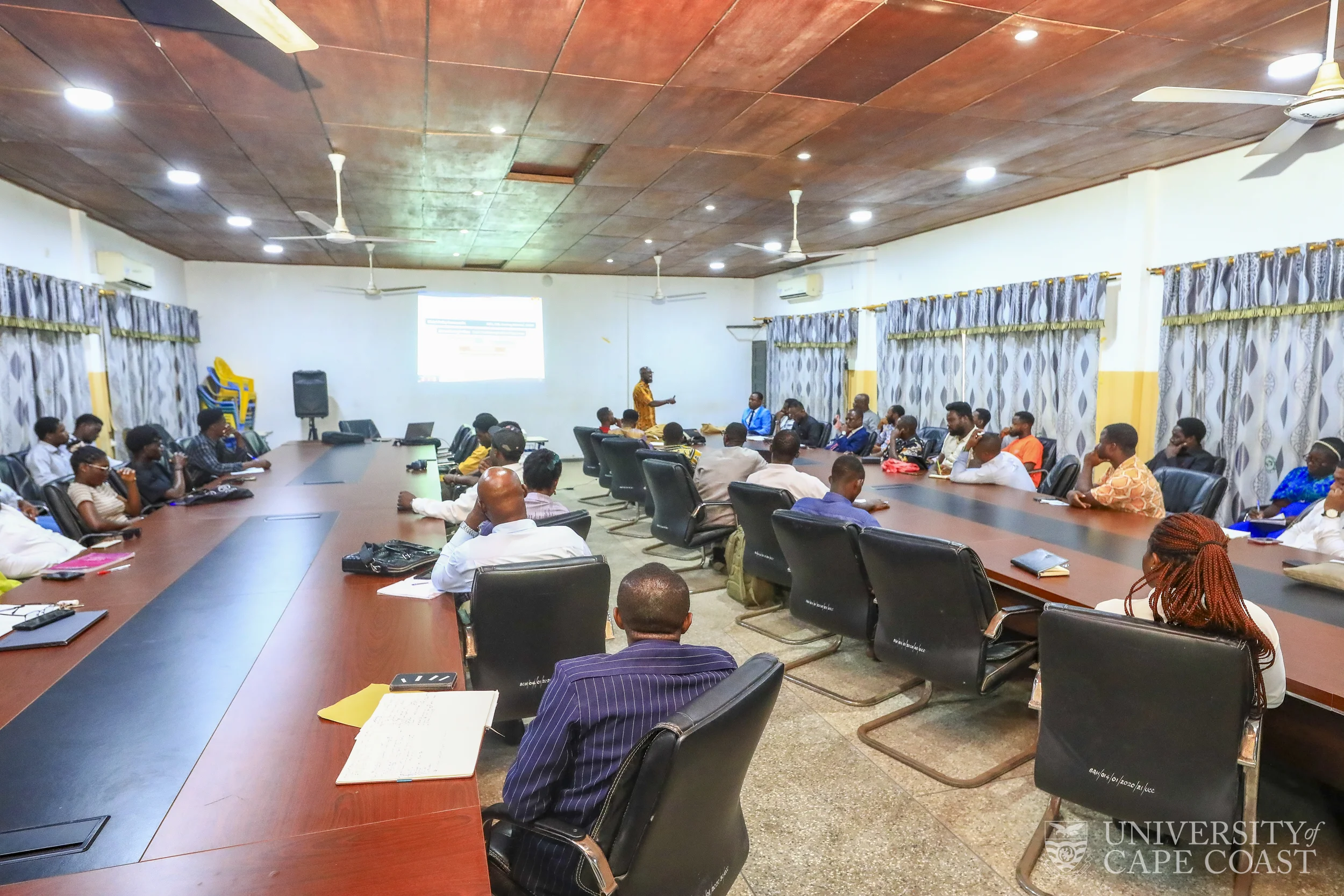
Discussants at the 13th Jurists’ confab of the Faculty of Law, University of Cape Coast, have called for Ghana's legal education reforms to be implemented in a manner that expands opportunities for aspiring lawyers without compromising professional standards.
Held on the theme, "Access Versus Standards: The Future of Legal Education in Ghana," the confab brought together members of the bench, bar, legal academics, and practitioners, as well as policymakers, to examine the opportunities and challenges presented by the Legal Education Act, 2026 (Act 1170).
The conference was dominated by a deep interrogation of whether Ghana’s push to expand access to legal training can coexist with the preservation of professional standards, especially in the wake of reforms that decentralise legal training and introduce a national bar examination.
A Justice of the Supreme Court of Ghana, Kweku T. Ackaah-Boafo, situated the reforms within a broader historical and constitutional debate on access, elitism, and fairness in legal training.
He noted that for decades, admission into the profession has been characterised by limited capacity and high attrition rates, leaving many qualified graduates without a pathway to practice.
He further argued that the introduction of multiple accredited faculties under the new legal education framework risks shifting, rather than removing, the bottleneck.
“The single gate at the head of the whole system has not disappeared so much as it has multiplied into many smaller gates spread across the country,” he observed.
According to him, the central challenge was not merely expanding access, but ensuring that standards were clearly defined, uniformly applied, and meaningfully assessed.
He warned that the effectiveness of the reforms would depend heavily on the calibration of the national bar examination, which now carries the burden of determining professional competence.
Providing comparative insight, he referenced his experience in Ontario, Canada, where he was called to the bar after a structured system of academic and practical training followed by licensing examinations.
He stressed that Ghana’s reform direction mirrors global trends but requires strong institutional capacity to succeed, particularly in ensuring adequate staffing, practical training, and regulatory oversight.
An Associate Professor and the Head of the Department of Private Law, Faculty of Law, at the Kwame Nkrumah University of Science and Technology (KNUST), Prof. Renee Aku Sitsofe Morhe emphasised that the reforms should be evaluated not only in terms of access, but also in terms of value for money and institutional readiness.
She noted that concerns about infrastructure, staffing, and accreditation remained central to sustaining quality under the new decentralised system.
Prof. Morhe highlighted the importance of clinical legal education and stronger collaboration between academia and practitioners, arguing that practical exposure should be embedded in training to bridge the gap between theory and practice.
Defending the reforms, the honourable Member of Parliament for South Dayi, Rockson-Nelson Dafeamekpor, said the new legal framework was designed to remove barriers that have prevented thousands of qualified students from advancing in the legal profession.
He revealed that about 3,000 Ghanaian students were currently pursuing professional legal education abroad, resulting in millions of dollars leaving the country annually.
“The philosophy behind the law is clear. The object of legal education is not exclusion but quality,” he stated.
Mr. Dafeamekpor explained that the law introduced uniform admission standards, stronger accreditation requirements and provisions to accommodate persons with disabilities, while preserving rigorous professional assessments through the national bar examination.
He argued that the reforms would decentralise legal education and enable students across the country to pursue professional legal training closer to home.
On his part, John-Mark Alifo, a Justice of the High Court, also challenged the traditional framing of access versus standards as a false dilemma.
He argued that expanding access does not automatically lower standards, insisting instead that true professional excellence depends on rigorous, transparent, and competency-based assessment.
According to him, Ghana’s reform agenda should prioritise clinical legal education, moot courts, and practical legal clinics to ensure that graduates are not only knowledgeable but also functionally competent.
He maintained that the passage of the Legal Education Act 2026 represents a historic opportunity to modernise legal training and redefine what it means to be a lawyer in Ghana.
Representing the Acting Vice-Chancellor of UCC, the Provost of the College of Humanities and Legal Studies, Prof. Daniel Agyapong, underscored the need for institutional transformation in line with the new law, noting that curriculum reform, faculty development, and accreditation systems should be aligned with statutory requirements.
“The law must guide us in everything that we do,” he said, stressing that the reforms provide a framework for modernising legal education rather than diluting it.
He further raised concerns about harmonisation across institutions and the regional mobility of students, calling for a common framework that would enable seamless academic progression across law faculties.
The discussions also touched on faculty capacity, with speakers warning that the expansion of legal education institutions could strain the limited pool of experienced practitioners and judges who served as instructors in specialised areas such as evidence, advocacy, and conveyancing.
Other dignitaries who graced the occasion included the Oguaamanhen, Osabarima Kwesi Atta II, and the founding Dean of the Faculty of Law, UCC, Prof Phillip Ebo Bondzie-Simpson.
Source: Documentation and Information Section-UCC