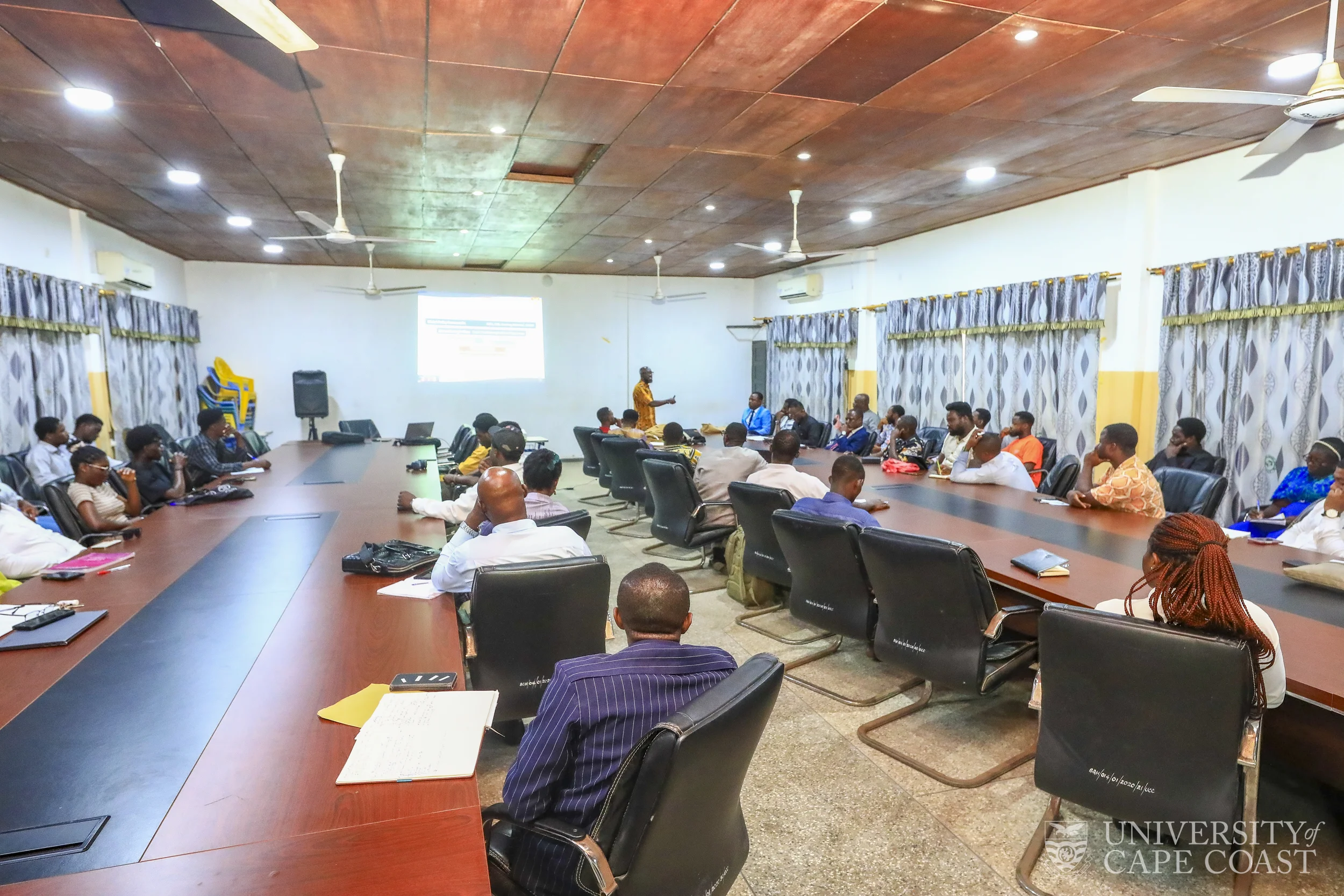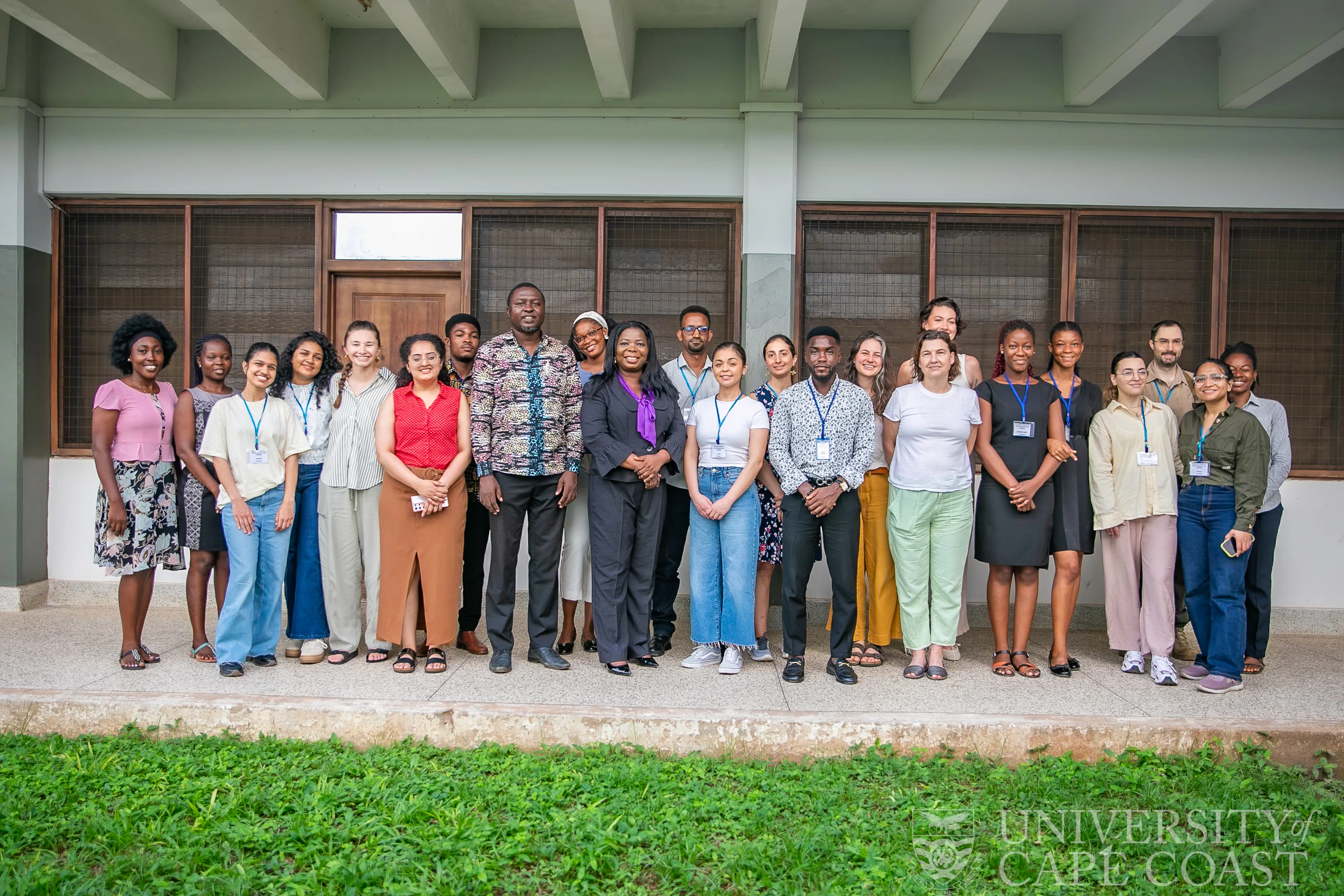
A training workshop to build capacity in Advanced Module Vector Biology and Control in Ghana is underway at the University of Cape Coast (UCC).
The eight-day workshop, spanning April 15th to 24th April, 2026, is aimed at enhancing the capacities and capabilities of the participants in practical experience of essential techniques, as well as significant theoretical knowledge.
The workshop is being organised jointly by the Department of Conservation Biology and Entomology, UCC, and the Centre for International Health at the Ludwig-Maximilians-Universität (LMU) Munich, Germany.
Topics to be treated include Artificial Intelligence in Vector Biology; Morphological Identification of Vectors; Functional Insect Morphology and Systematics with a focus on vectors; larvae sorting in the field laboratory; and Molecular techniques for vector surveillance and lab work: mosquito Identification, among others.
The Provost of the College of Agriculture and Natural Sciences, Prof. Rofela Combey, who opened the workshop, said vector-borne diseases account for more than 17% of all infectious diseases globally, causing over 700,000 deaths each year.
"Understanding their biology, behaviour, and ecology is the first step. Controlling them effectively is how we save lives," she added.
She described the attendees as the next generation of global health leaders in Vector biology and Control.
She continued: "Your diverse backgrounds, national perspectives, and professional expertise are precisely what make this training workshop extraordinary."
Prof. Combey hailed the partnership between UCC and LMU Munich since 2018.
The Provost commended the One Health Target Project Team led by Dr. Andreas Adutwum Kudom, the Coordinator for the programme at the Department, for organising the event.
In a short remark, the Course Coordinator at the Centre for International Health at the Ludwig-Maximilians-Universität (LMU) Munich, Germany, Dr. Vahuka Valiyakath, said the Centre was ready to equip participants with the requisite knowledge on vector biology and control in Ghana.
At the end of the workshop, participants will receive a certificate of attendance, as well as 3 ECTS credit points.
Source: Documentation and Information Section - UCC